The Hand That Shook the Hand That Shook Lincoln's
From Lincoln's handshake to a mustard gas cloud in France, the stories of strangers keep finding their way into our lives.
BY KEN BRADFORD // POSTED APRIL 8, 2026
It seems like forever since I shook Ida's hand.
Ida Chipman was a free-lance writer when I was in charge of a small section of the local newspaper. She wrote lovingly and often about the people of Marshall County. A Southerner by birth, she occasionally would drop some local gossip about a neighbor, in her comical but irresistible drawl: “Ooh, he's the good one. His brothers are T-R-A-S-H.” For me, everything else went on the back burner when Ida showed up with her pen and notebook.
On one day in particular, she was beaming. She thrust out her right hand, and I shook it.
“Now you've shook the hand that shook the hand that shook the hand,” she said.
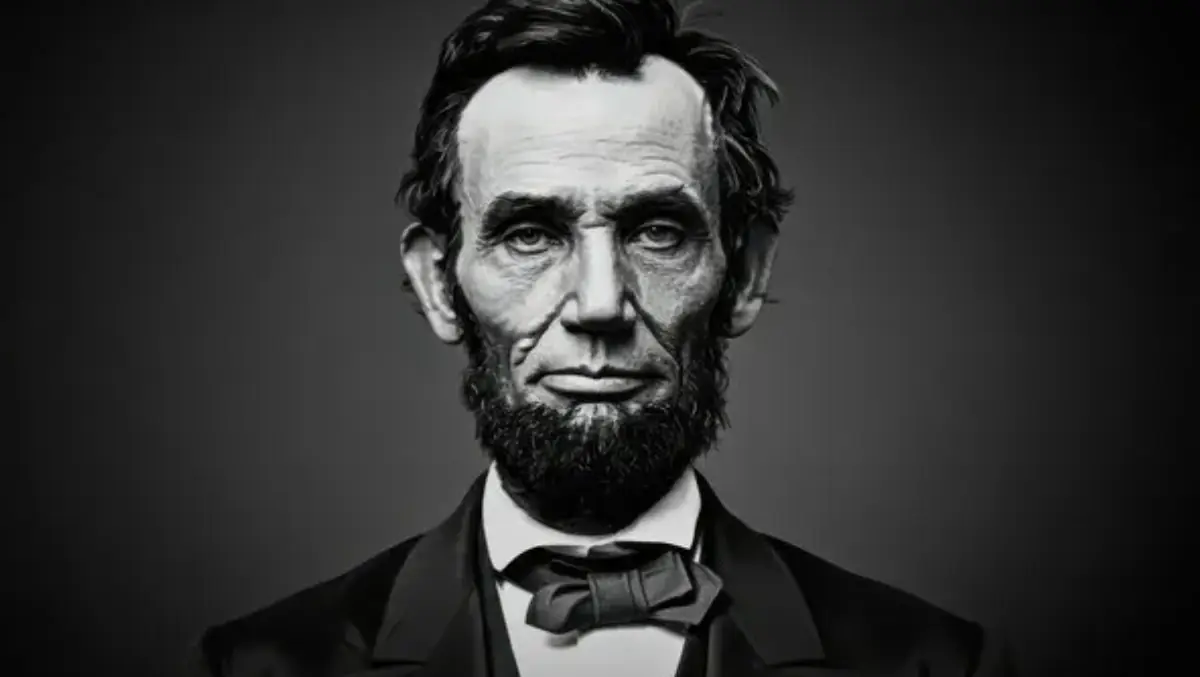
Then she told me about the story she was going to write about Gene Wolff, an old farmer she had found. His hand, as she told it, stretched back through time to touch Abraham Lincoln.
This almost needs a diagram to explain it, but I'll do my best here.
We begin with Julius Rodman, who was born in 1846. Honest Abe Lincoln was the Rodman family's attorney. Julius accompanied his father to one of the 1858 debates where Lincoln was challenging Stephen Douglas for a U.S. Senate seat. After the debate, young Julius shook Lincoln's hand.
Eighty-three years later, in 1941, Julius was 95 years old and owned a 500-acre farm in LaPorte County, which the Wolff family rented. Gene, born in 1927, had finished a hard day in the fields there one evening, and he stopped to say goodbye to Mr. Rodman.
That's when Julius told Gene the story of shaking the hand of a beanpole politician who became the nation's 16th president, who saved the Union in the Civil War, who issued the Emancipation Proclamation ending slavery and who wrote the “Four Score” Gettysburg address, a humble literary masterpiece that many of us memorized in junior high school.
On a February morning in 2006, it was 65 years since meeting Julius when Gene told his story to Ida. Never one to squander an opportunity, Ida shook the hand of Gene, who had shaken the hand of Julius, who had shaken the hand of Abraham Lincoln.
And later in the day, thanks to Ida, I shook the hand that shook the hand that shook the hand.
A subscription to the News-Times is always free.
Enter your email address and get new issues straight to your inbox.
All of this came to mind recently when I was looking through a book I bought at the Center for History sale. It was a bound volume of South Bend Tribunes published from January 1 to March 31, 1918.
I love old newspapers. Many of my best moments are spent squinting at tiny type as I try to bring order to things I don't understand. In this case, it was a story about a grandfather I never met.
In the early months of 1918, Herman Haase was leaving his family farm in Napoleon, Ohio, to fight in World War I. Soon after he arrived in Europe, he was with his squadron in a trench in France when enemy soldiers released a cloud of mustard gas that wafted his way.
Herman wasn't killed by the toxic gas, but his lungs were ruined. When the war ended, he returned to Napoleon, married Frieda Baden and fathered four children, including my mother. Whenever he was healthy enough, he drove delivery trucks, but he couldn't do heavy farm work anymore.
One of the saddest stories my mother ever told me, months before her death in 2023, was about a day in 1936 when an older family member drove her to Dayton. There she stood outside the veterans hospital and waved in the direction of a window of a room where her father was dying.
His cause of death was listed as tuberculosis, but it was the war nearly two decades earlier that had killed him.
My grandfather's parents had been part of the German immigration wave before the 1880s. Not everyone in the Haase and Holers families left the Old World. Some wouldn't budge from their homelands in Niedersachsen and Lower Saxony.
And those folks — second cousins of Herman, in some cases — were among the vicious Huns that he was sent to France to kill.
As I was reading my 1918 editions of the Tribune, I realized that a good percentage of South Bend residents at that time were, like my grandfather in Ohio, recent German immigrants themselves.
How baffling it must have been for them, reading dispatches in the local newspaper about our enemies cold-bloodedly murdering women and children or starving the workers who refused to support the kaiser's war. Cousin Rudy or Uncle Heinrich certainly wouldn't be doing that. It didn't make sense.
Still, because Herman went where he was sent and stood where he was assigned, the mustard gas found him.

There was something else remarkable that I found in those yellowed pages from 1918 — a grudging recognition that Americans already were living in a spoiled paradise.
On the surface, the Tribune was bursting with pride over South Bend's growth. Our biggest employer, Studebaker, was preparing to hire 7,000 more workers at its car plant. City fathers estimated this would add another 15,000 people to a population already close to 60,000.
Because we were good, the city would grow. Even with the war in Europe and the Spanish flu pandemic here, we were building new homes, birthing lots of babies, going to church, preparing for another baseball season.
But there was a cost to all of this. And it's mentioned on Page 9 of the Jan. 5 edition under the headline of “Early Recollections of South Bend Recorded by Pioneer Editor.”
This article was a reprint of an article written originally by John D. Defrees in 1873 about his first trip to the South Bend area in 1831.
Defrees and his brother Joseph had moved here to the publish the small settlement's first newspaper, which they called the St. Joseph's Intelligencer.
In 1831, this community was little more than a trading post run by Alexis Coquillard. His customers mainly were itinerant traders as well as Natives from the Potawatomi tribe.
Defrees' first impression was, Wow. As small as this settlement was, it was a welcome sight after his “lonely ride” from his home in Ohio.
“I think there was at that time but one house between St. Mary's O. and Fort Wayne,” he wrote. “There were not a great many between Fort Wayne and this place, except on Elkhart prairie, where probably a half-dozen houses had been erected.”
When he wrote those words, though, it was with a slight sense of mourning, regretting the changes that civilization had wrought in the 40 years since his first glance. His favorite spots here had become a bit trashy.
Settlers hurrying westward had spoiled the pristine wilderness that, in his first days, was still under the loving care of the Potawatomi. “Those of the present day who did not see the country at that time can form but an imperfect idea of its beauty,” Defrees wrote.
Translation: We have newer stuff now, but maybe it's not as good as the old stuff.
Defrees wasn't pouting about the draining of the Kankakee Swamp, which had started but wasn't yet cataclysmic in 1873. It likely was smaller changes — streets carved through a favorite meadow or trees sacrificed by necessity for the building of homes.
It touches us because of what we miss from our own life span — the old downtown Kresge store where Beatles albums sold for less than $2 apiece, our steep sledding hill now smoothed for use by golf carts, a country church gone so long that only a few of us remember.
Defrees' face isn't on our five-dollar bill, and his words aren't as memorable as Lincoln's Gettysburg Address. I get it. But in my mind, it's a small blessing that his words can still reach us, reminding us to look around while we still can.
It's almost a miracle that I know of him. The only reason I do is because he visited South Bend in 1831, wrote an article about it in 1873 with a reprinting in 1918 that I found for the first time in 2026.
It's like the story of a World War I mustard gas cloud that drifted into my family tree in 1918, causing a death in 1936 that brought tears to my mother's eyes because she needed to speak of it in 2022.
And, of course, there's this thin link with a famous president that runs by handshakes from one youngster in 1858 to another in 1941 and then to my dear friend Ida in 2006.
We never know where someone else's stories start and where they lead. But here I am, eager like Ida, somewhere in a line, looking to give a hand or take one.