Bob Rush: From Riley High School to Nazi Germany to Wrigley Field
The local kid who threw harder than anyone in the league and became a two-time All-Star for the Cubs
BY AARON HELMAN // POSTED MAY 20, 2026
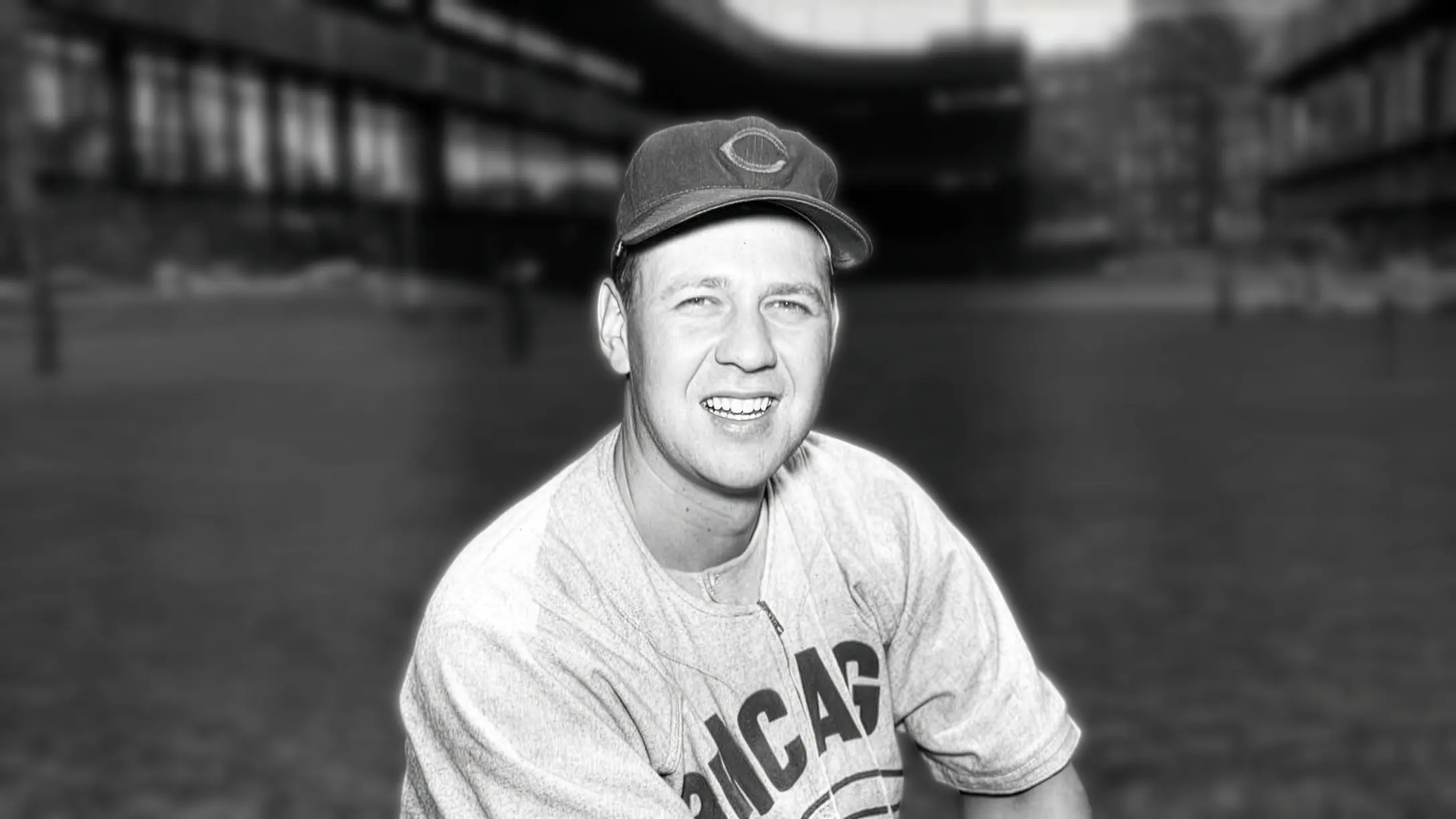
The first time we find Bob Rush in the pages of the South Bend Tribune, he's getting shelled as a 15-year-old pitching for an American Legion team in July 1941. It was a rough outing for the lanky freshman, and he came out on the wrong end of a 6-1 loss.
It was just about the last bad game he'd ever pitch in his hometown.
By 1943, Bob Rush was the most dominant hurler in the city, tossing a no-hitter for Riley High School as junior and striking out 18 of the 21 batters he faced in the seven-inning game. It was enough to attract the attention of the Cleveland Indians, who offered Rush a contract and a chance to begin his professional career before he even graduated from high school.
Much to the chagrin of South Bend's opposing hitters, Rush declined the contract. He stayed in school and pitched even better the next season, at one point hurling two consecutive no-hitters as a high-school senior.
That was enough to attract the attention of the Chicago Cubs. They were ready to make an offer that seems pretty unbelievable now and was pretty unbelievable even then.
Rush was ready to take them up on it.
A subscription to the News-Times is always free.
Enter your email address and get new issues straight to your inbox.
Bob Rush's father, Harry, had also been a pitcher, good enough to pitch briefly in organized baseball — one season in the Class D Central Association in 1917 — before sliding into the semipro circuit, where the money was actually better and the dreams were correspondingly smaller.
Harry Rush knew well what baseball could give a man. He knew better than most what it couldn't. It was Harry Rush who insisted his son stay in school instead of signing with the Indians. But Harry Rush was also smart enough to see what the scouts saw. His son had a major league fastball when he was still in high school. Pro scouts declared time and again that Bob Rush, still a high school senior, could throw the ball harder than anyone else in the big leagues.
The Cubs wanted Rush. They always had scouts crawling South Bend's junior and industrial leagues, and three years after they signed a young fireballer named Ed Hanyzewski from the South Bend sandlots, they had their eyes set on another prize.
But Harry Rush wanted his son to get an education. He named his terms. They were unconventional. The Cubs agreed. The deal went like this:
Rush would receive a $3,000 signing bonus, and the Chicago Cubs would pay for four years tuition at Purdue University, set to begin immediately, so that Bob Rush could pursue a career in aeronautical engineering. Rush would not report to the team until the spring semester ended. He would leave the team when the fall semester began.
These, presumably, would have been Bob Rush's minor league years. By the time he was ready to jump into the majors, he would already be an engineer. Not everyone could have negotiated a contract like this, but not everyone had a fastball like Bob Rush.
But Uncle Sam had different ideas.
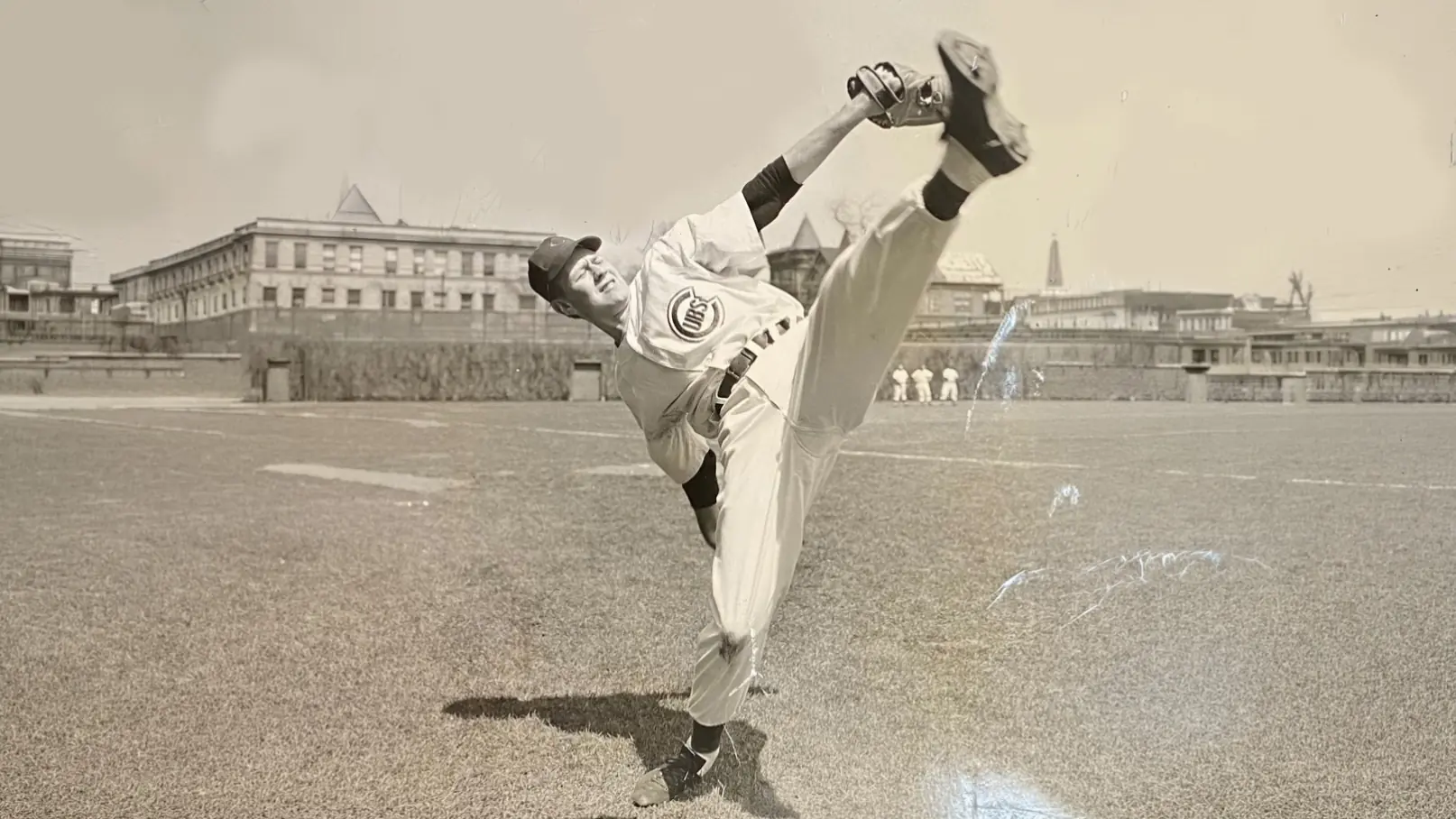
Bob Rush was inducted into the United States Army in October 1944, a few months after signing his contract, during what should have been his freshman year at Purdue University. He completed basic training at Camp Croft in South Carolina and was assigned to the 4th Armored Division in General George Patton's 3rd Army. He was a machine gunner in a jeep reconnaissance patrol, pushing through Germany on the front lines.
When the war ended, Rush stayed in Europe with the occupation forces before eventually coming home to South Bend in the summer of 1946. Three years were gone. The Purdue plan was a casualty of the same war that had consumed everything else.
The Cubs couldn't wait four more years for their pitching prospect to finish school. Rush's career couldn't wait either.
By spring of 1947, Bob Rush was a full-time baseball player.By spring of 1947, Bob Rush was a full-time baseball player.

Assigned to Des Moines in the spring of 1947, Rush tore through the Class A Western League — 6-1, with a 1.61 ERA — and earned a midseason promotion to Double A Nashville. A Chicago Tribune columnist reported that Rush was considered one of the hardest throwers to appear in the Southern Association in 20 years. By the following spring, with fewer than 200 professional innings under his belt, he was in the Cubs' rotation.
What followed was a long and genuinely distinguished career with a team that made distinguished careers difficult. The Cubs never posted a winning record in his ten years on the North Side. Rush averaged 222 innings and 12 wins per season despite it. Dizzy Dean, who had seen a few pitchers in his time, called Rush's fastball — a heavy, late-breaking sinker that catchers described as feeling like a shotput — the fastest in the league.
In 1950, Bob Rush accomplished something truly unusual. He made the National League All-Star team despite leading the league in losses.
His best season came in 1952. Rush pitched to a 2.70 ERA and made his second All-Star team. At one point he had a 32-inning scoreless streak. His best big-league start came on May 30 against the Cincinnati Reds. Rush fired a complete game, two-hit shutout and struck out ten. He carried a perfect game into the seventh.
The South Bend Tribune, which called high school Bob Rush a “long stringbean” was now calling him “South Bend's Buzzsaw.”
After his time with the Cubs was over, he spent a few years with the Milwaukee Braves and made a pitching appearance in the 1958 World Series. He played alongside legends like Ernie Banks, Eddie Mathews, Warren Spahn, and Hank Aaron.
Rush retired from professional baseball after an unremarkable half-season with the Chicago White Sox in 1960. He relocated to Mesa, Arizona where he continued to live until his death in 2011.
In 2003, Riley High School named its baseball field after Bob Rush. Rush was inducted into the Indiana Sports Hall of Fame a few years later.