Who the Heck is Warren Fairbanks?
St. Joseph County's website refers to him as the "now Vice President." He's been dead since 1918.
BY AARON HELMAN // POSTED MAY 8, 2026
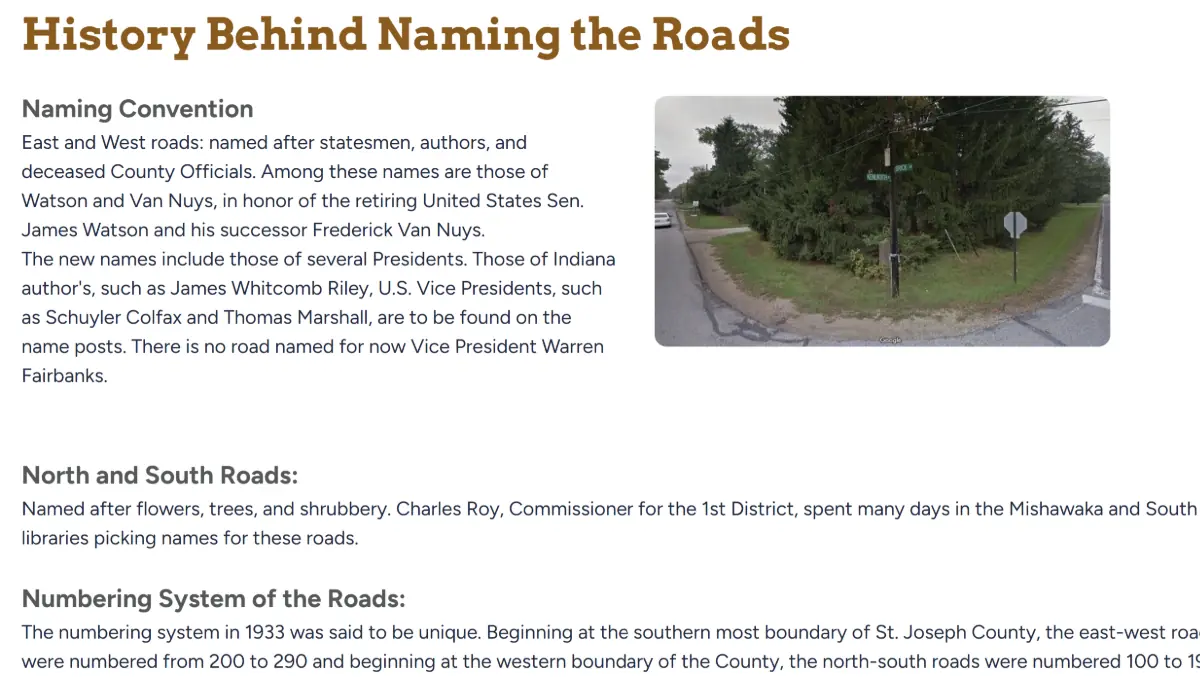
I want to tell you about my favorite webpage on the internet. It's on the official website of St. Joseph County, and it explains the history behind the naming of the county's roads. The document is not stamped with a date, and it has been updated throughout the years, but the original version was written sometime between 1905 and 1909.
I'll explain why we know that in a little bit.
The page explains the alphabetical grid of trees and plants that describes the county's north-south roads. It explains that the east-west roads are named after statesmen, authors, and deceased political officials. It's pretty normal stuff, but then comes the curveball when you get to the last sentence of that first paragraph:
“There is no road named for now Vice President Warren Fairbanks.”
You might wonder who exactly Warren Fairbanks is. I certainly did. I'd never heard of the guy before, and I was pretty sure he hadn't been a Vice President anytime in recent history, and certainly not now.
So the question must be asked:
Who the heck is Warren Fairbanks?
A subscription to the News-Times is always free.
Enter your email address and get new issues straight to your inbox.
Warren Fairbanks actually was a Vice President of the United States. It just happened a while ago, during the Roosevelt administration.
The Teddy Roosevelt administration.
Specifically, Fairbanks was Vice President from 1905-1909, which is how we know that the original document that inspired the county website was written during those years. For more than a century, the document has been updated, edited, copied, pasted, and moved from one medium to another. No one has ever removed the word now.
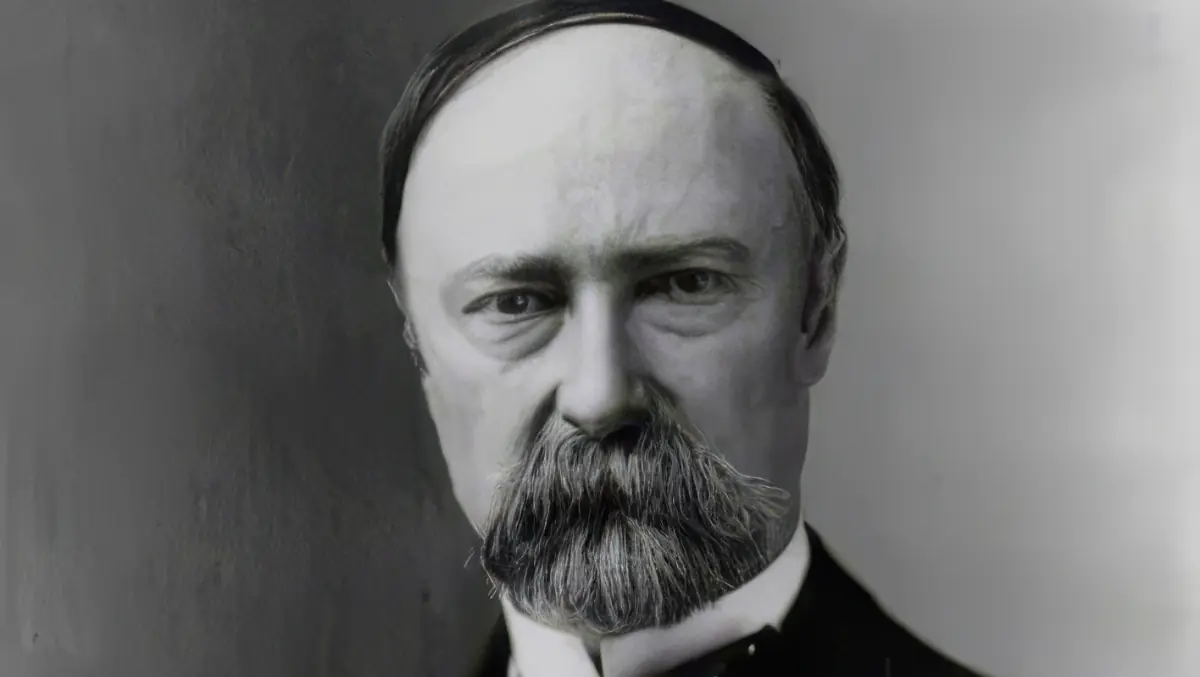
Charles Warren Fairbanks was born in a log cabin in Ohio in 1852. He grew up poor. His father was a wagon-maker. His family were temperate Methodists. It was the kind of upbringing that, decades later, turned Fairbanks into the kind of Puritanical political candidate who publicly advocated for buttermilk as a suitable substitute for hard liquor.
The papers called him Buttermilk Charlie.
Buttermilk Charlie worked first as a lawyer out of Indianapolis before snapping up a Senate seat in 1896. He became a close advisor to President McKinley and helped settle a dispute about the Alaska territory's borders. It was enough to earn favor in the eyes of Republican bosses and enough to earn favor in the eyes of the Alaskans.
The Alaskans named the town of Fairbanks after Buttermilk Charlie. The Republicans named him the Vice-Presidential candidate on the Theodore Roosevelt's 1904 ticket. They won in a landslide.
And then the story gets a little complicated.

Roosevelt and Fairbanks did not like each other. It was not a secret. Roosevelt was a progressive who believed in reform, regulation, and the vigorous exercise of federal power. Fairbanks was a conservative whom Roosevelt privately called "a reactionary machine politician." The Republicans had been placed Fairbanks on the ticket specifically because he was so conservative. They'd hoped to temper Roosevelt by elevating Fairbanks in the administration.
It didn't work.
Roosevelt spent four years sidelining his Vice President, and he did a good job of it. Fairbanks was a non-player in the Roosevelt administration. He attended no cabinet meetings. He cast no tie-breaking votes in the Senate, and he became the first Vice President in history to serve a complete term without doing so. He showed up, presided over the Senate, and waited for something to change.
Then came the cocktail incident.
In May of 1907, Roosevelt came to Indianapolis to dedicate a statue. Fairbanks, being a gracious host, threw a luncheon in the President's honor at his Meridian Street mansion. The menu was elaborate. The house was decorated. Everything was in order. And then a friend of Mrs. Fairbanks, while helping with preparations, noticed something was missing and promptly telephoned the Columbia Club to order forty cocktails to be delivered immediately.
Fairbanks was a teetotaler. A strict Methodist prohibitionist who championed buttermilk as the proper American drink. He had no idea the cocktails were coming.
But the newspapers did. The Patriot Phalanx, an Indianapolis prohibitionist paper, broke the story first. From there it spread everywhere to papers across the country. The papers gave him a new nickname.
They called him Cocktail Charlie, and it came as a blow that devastated his political career. One Methodist official said that Fairbanks had been “crucified by a cocktail.” He lost much of the support of the temperate end of his party, and the teetotalers didn't object when Roosevelt threw enough of his own weight around to block Fairbanks from receiving the 1908 Presidential nomination. Fairbanks gave it another try in 1916, running as Vice President on the Republican ticket behind Charles Evans Hughes.
They lost.
Fairbanks never did get that road name in St. Joseph County, but he did get several streets throughout the state of Indiana, and he did get that town in Alaska.
Fairbanks died at home in Indianapolis on June 4, 1918. He was 66 years old. He is buried in the Crown Hill Cemetery.