Indiana Dug the Longest Canal in North America
How the Mammoth Internal Improvements Act of 1836 dug the longest ditch on the continent and nearly bankrupted the state
BY AARON HELMAN // POSTED JUNE 5, 2026
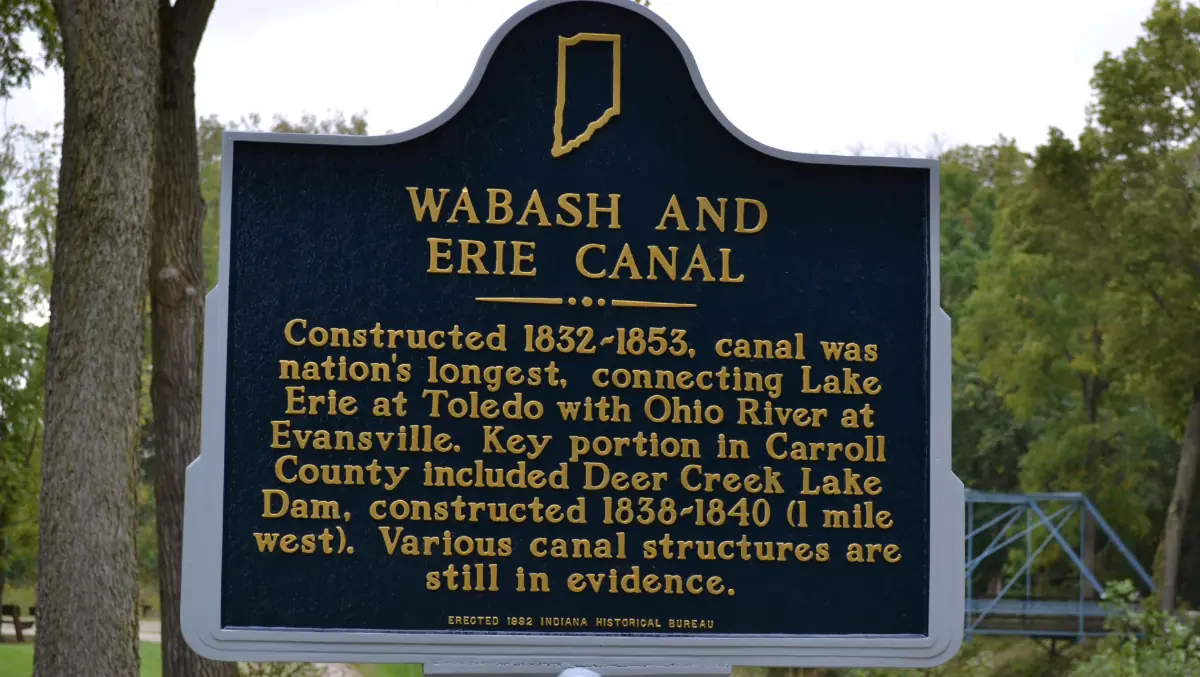
In 1836, Indiana was nineteen years old and feeling good about itself. It had a governor, a functioning legislature, and the kind of can-do optimism that young states in good economic weather tend to develop.
The future was bright, and across the United States, the future looked like canals.
New York had built the Erie Canal in 1825, and the project became a spectacular success almost immediately. Shipping costs plummeted, towns boomed overnight, and investors made fortunes that would persist for generations. By the mid-1830s, Indiana had developed a terminal case of canal fever.
On January 27, 1836, Governor Noah Noble signed the Mammoth Internal Improvements Act, and yes, that was the actual name of the bill. The law authorized $10 million for eight separate infrastructure projects across the state including canals, roads, and a railroad. The plan was to connect Indiana top-to-bottom and river-to-lake. In the process, lawmakers promised that the state would become an unmatched commercial powerhouse. To fund those Mammoth Improvements, the state issued bonds and sold them to financial houses in London.
The State of Indiana had just taken out a mortgage three times its annual budget.

The legislators who voted for the Mammoth Internal Improvements Act were not all fools. They genuinely believed that future revenues would cover the debt several times over. They anticipated land values rising. They had charts and projections and optimism. Only nine politicians voted against the bill across both houses of Indiana's legislative branch. The rest were all in.
And now, so too, was the whole State of Indiana.
Almost immediately, everything went wrong.
First came the Panic of 1837, a financial crisis that collapsed credit markets across the country and took Indiana's projected revenues with it. By 1839, the state had stopped construction on everything except the largest canal project, the Wabash and Erie. By 1841, they were defaulting on their repayments. A collection of powerful bankers in London was threatening to own the entire state. Indiana negotiated the debts, wriggled out of its deals, and nearly went bankrupt in the process.
Of the eight projects funded under the Mammoth Bill, not one was completed by the state. Two were eventually finished by the creditors who took them over.
It is considered the greatest financial disaster in the history of the state. There's not really a close second.
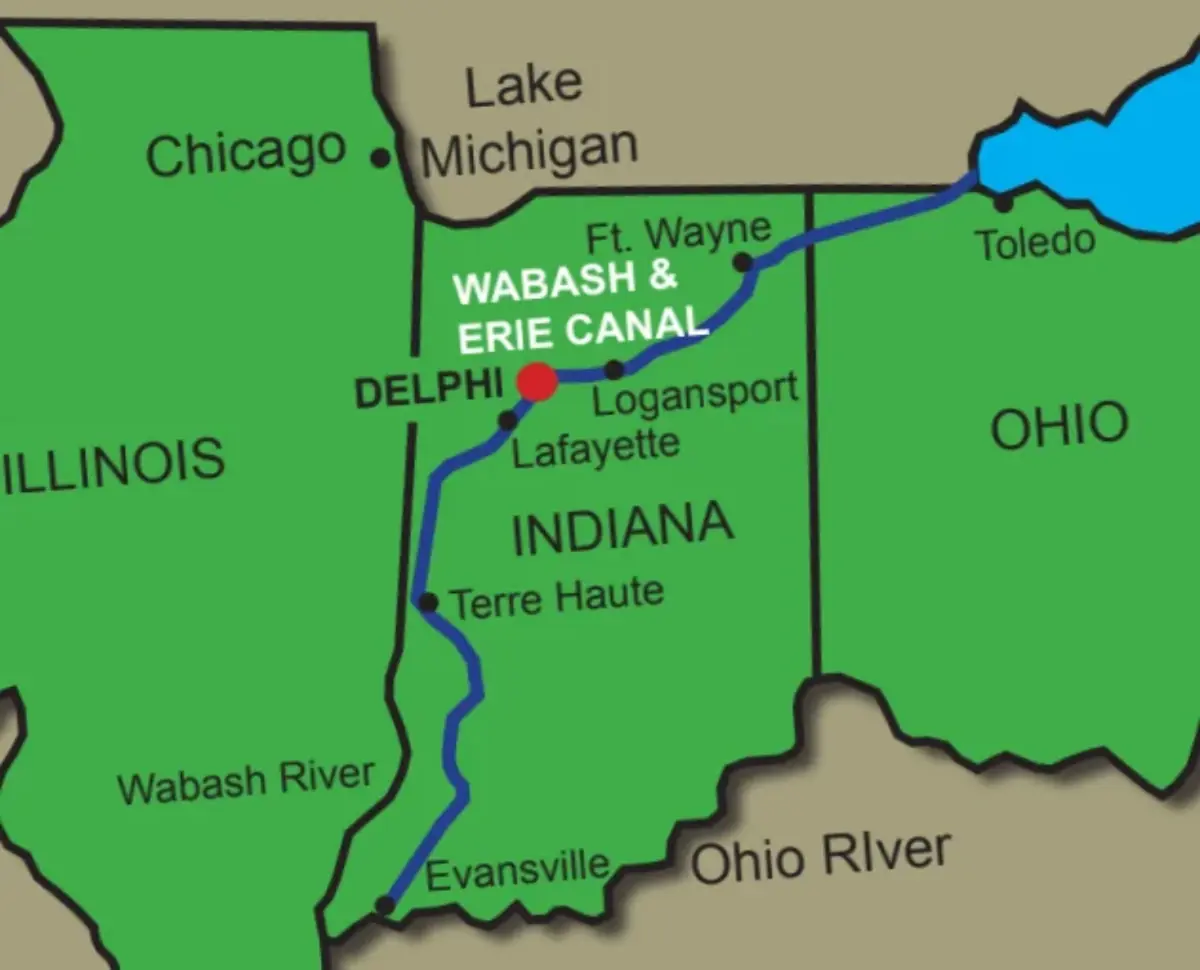
The Wabash and Erie Canal was the greatest prize of the Mammoth Bill, and it was the only project that survived when everything else got taken back by the English bankers. Construction had started even before the Mammoth Bill, back in 1832, and it kept going. By the time it was finished in 1853, it stretched 468 miles from Toledo, Ohio to Evansville, Indiana. It was — and remains — the longest canal ever built in North America.
Problem was, it was already obsolete.
By the time the full length of the canal was open, trains were already faster, cheaper, and more practical than barges. The trains and the canal managed to exist in tandem for a brief and fleeting moment, but the writing was on the wall from the very beginning. By 1874, the canal was abandoned. It was over.
Entire towns and industries sprung up across Indiana, drawn in by the promise of the canal. When the state and the canal went broke, so did the entrepreneurs who'd trusted the broken promise. Dozens of towns across Indiana had to figure out what to do next.
Many of them didn't make it.
A subscription to the News-Times is always free.
Enter your email address and get new issues straight to your inbox.
You can't dig a ditch across a state the size of Indiana without leaving some scars and maybe a few ghosts along the way.
Communities throughout the state still carry those scars. In Wabash, the buildings on the south side of Canal Street have their rear entrances facing what used to be the canal docks. The docks are gone. The back doors are still there. In Delphi, a section of the canal remains preserved and navigable. If you look carefully at a satellite map, you can still see the faint line of the old canal, carving a wandering path southwest across the state, and it's a truly mind-boggling path:
468 miles, dug by hand, mostly by Irish and German immigrants.
And it worked.
For everything that the Wabash and Erie Canal wasn't, it's worth remembering that the thing actually worked, exactly the way that the engineers had promised, exactly the way the politicians had expected, and exactly the way that the population had hoped. It did what the ditch was supposed to do. The engineers who designed it weren't wrong. The laborers who built it didn't fail. The water flowed in the right direction.
None of that is much comfort to the Indiana taxpayers who spent decades paying off London bankers. None of it helped the schools and programs that never got the funding they were promised. None of it rebuilt the towns that bet on the canal and lost. The Mammoth Internal Improvements Act was a financial catastrophe, and no amount of engineering elegance changes that.
But the ditch worked. They dug 468 miles of canal across Indiana by hand, and when they were done, the water flowed from one end to the other, exactly as designed.
It just wasn't worth anything anymore.