New Road: Who's This?
Surprisingly, New Road has old roots in the history of Indiana journalism.
BY DEREK BRUBAKER // POSTED JULY 18, 2026
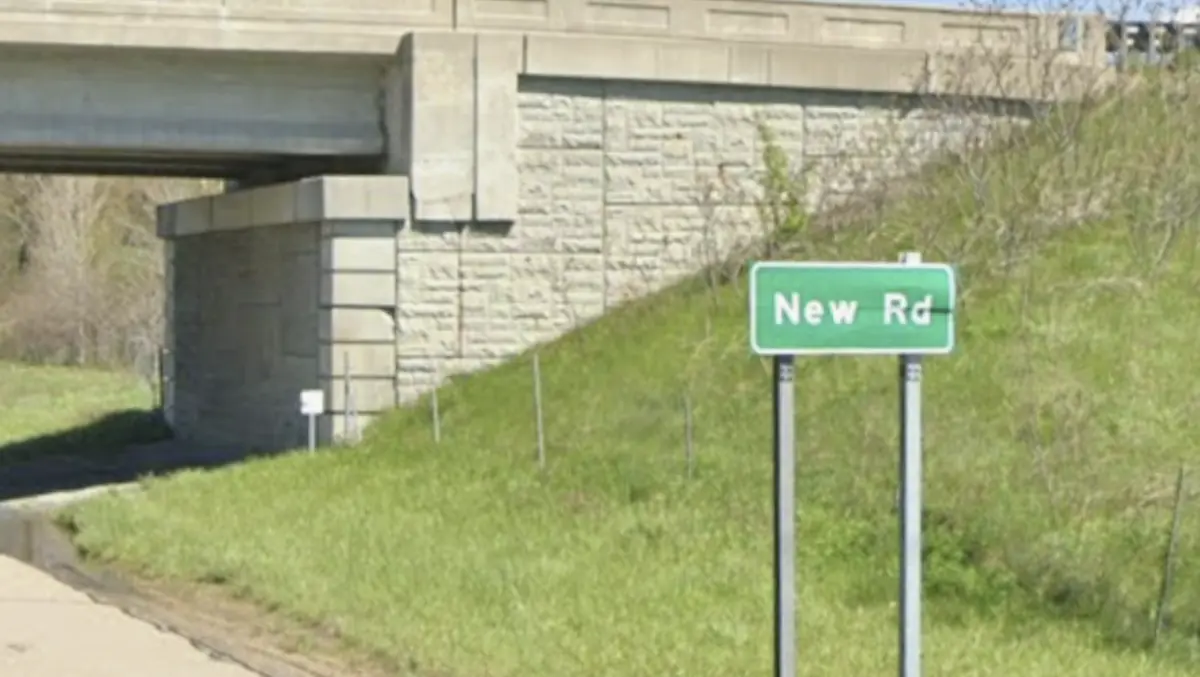
When driving north on US-31, I inevitably always pass a small green sign that proudly proclaims “New Rd”. For a brief second, I always think: “New? It seems pretty old to me!” and then I go on about my day. But that's what's so fascinating about New Road. This road isn't new. It never was.
In 1858, New Road didn't exist. Neither did the city of South Bend, which wouldn't be officially incorporated for seven more years. But in Indianapolis on December 31, 1858, a new era had begun: the life of Harry Stewart New. The New family was very patriotic, tracing their roots through Revolutionary War heroes and both state and national politicians.
When Harry S. New was only sixteen, his father, John C. New, was hand-picked by President Ulysses S. Grant as the Treasurer of the United States. Five years later, Harry's father bought the Indianapolis Journal, one of Indiana's leading newspapers at the time. In 1878, Harry S. New joined the Indianapolis Journal as a reporter and editor, assisting in his father's business. Naturally, both of the News helped sell the news.
A subscription to the News-Times is always free.
Enter your email address and get new issues straight to your inbox.
Harry S. New wrote for the Indianapolis Journal for 25 years, during which time he began his transition into the world of politics. He served on the Indiana State Senate for four years at the turn of the century, pausing his term to fight alongside his patriotic brethren in the Spanish-American War. Back in Indiana, the Journal had taken a turn. Once the home to frequent articles written by the likes of James Whitcomb Riley, Benjamin Harrison, and Eugene V. Debs; the newspaper was seeing a downturn of popularity in the early 1900s.
Harry S. New sold the Indianapolis Journal to the Indianapolis Star in 1903. For about a year, the newspaper was marketed as the Indianapolis Star and Journal, before the word Journal was dropped entirely. Today, the Indy Star is still the most circulated newspaper in the state, while the Journal has been largely forgotten.
Following the death of the Journal, Harry S. New represented Indiana at the Republican National Convention for 12 years, even briefly serving as the RNC chairman at the height of Teddy Roosevelt's presidency. Working behind the scenes with Roosevelt may have been fun, but in 1916, an exciting opportunity arose. The United States Senate had recently passed the 17th Amendment, which allowed the American people to vote directly for their Senators for the very first time. John Kern, the Democrat incumbent Senator from Indiana, lost in a landslide to Harry S. New, who had grown intense popularity among Republicans from his leadership of the RNC.

While in the Senate, New was a vocal opponent of Prohibition, a powerful voice against United States involvement in the League of Nations, and campaigned for the creation of the United States Air Force — with a particular interest in military communications.
In 1922, Harry S. New was up for reelection in the Senate and had an innovative new strategy. Rather than returning to newspapers, New became the very first Senator to use radio advertising to aid in his political campaigning, a brilliant idea that could have won him the race. Unfortunately, he chose to broadcast this political advertisement from an active Navy station, which immediately caused an uproar about political bias within the military and a prompt national ban on the practice.
Hindered by the scandal, New did not win reelection.
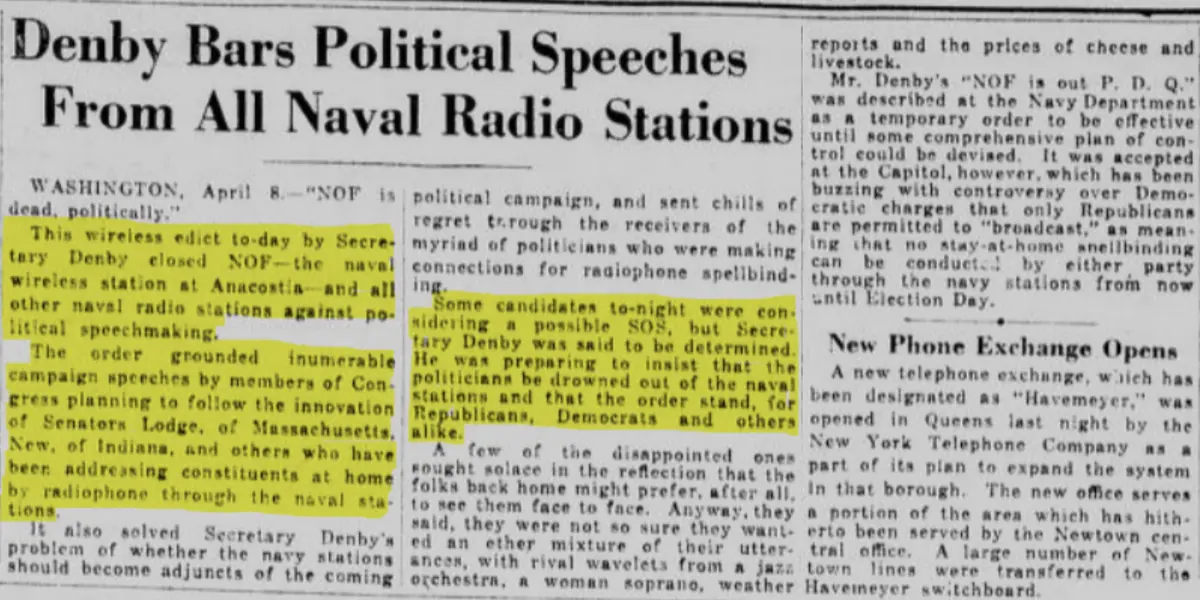
Luckily, a fresh political opportunity was right around the corner. Just two months after leaving the Senate in 1923, President Warren G. Harding appointed Harry S. New to the position of Postmaster General.
With Harding's premature death in office, New remained Postmaster General through all of Calvin Coolidge's presidency. It was a full circle moment for New. He had gotten his start in the political sphere as a reporter for the Indianapolis Journal and by the end of his life, he had risen to the highest rank in American communications: the sole man in charge of delivering daily mail across the country.
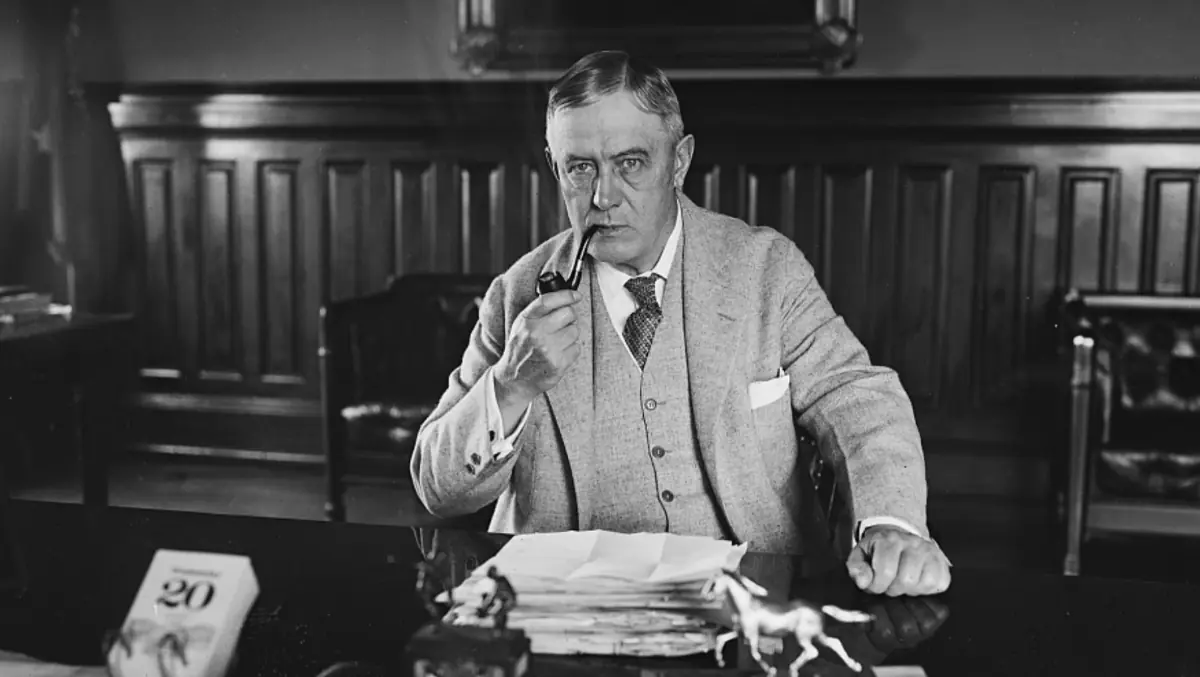
Harry S. New died on May 9, 1937 at the age of 79 at Johns Hopkins Hospital in Baltimore, Maryland. He wasn't particularly notable within St. Joseph County, so why do we have a street named after him here of all places?
In 1933, St. Joseph County was renaming all of its east/west roads in an alphabetic system and they needed someone to fill the “N” mile gap. Harry S. New was an obvious pick. He was a Hoosier, a former Senator, previously the owner of the largest publication in the state, and had just left the Postmaster General office a few years prior to the road renaming.
Many of the local postworkers in the area may have recognized that this road carried the name of their former boss. They probably didn't though.
That's the unfortunate truth about your last name being New: regardless of your achievements, any namesakes will be lost to history. It's no Washington Street or Dr. Martin Luther King Jr. Boulevard. For most locals, it will always just be “a new road”.