John Kern: The Man who Failed Upward
The man who lost the vice presidency, won the Senate, and still got a road named after him.
BY DEREK BRUBAKER // POSTED MAY 23, 2026
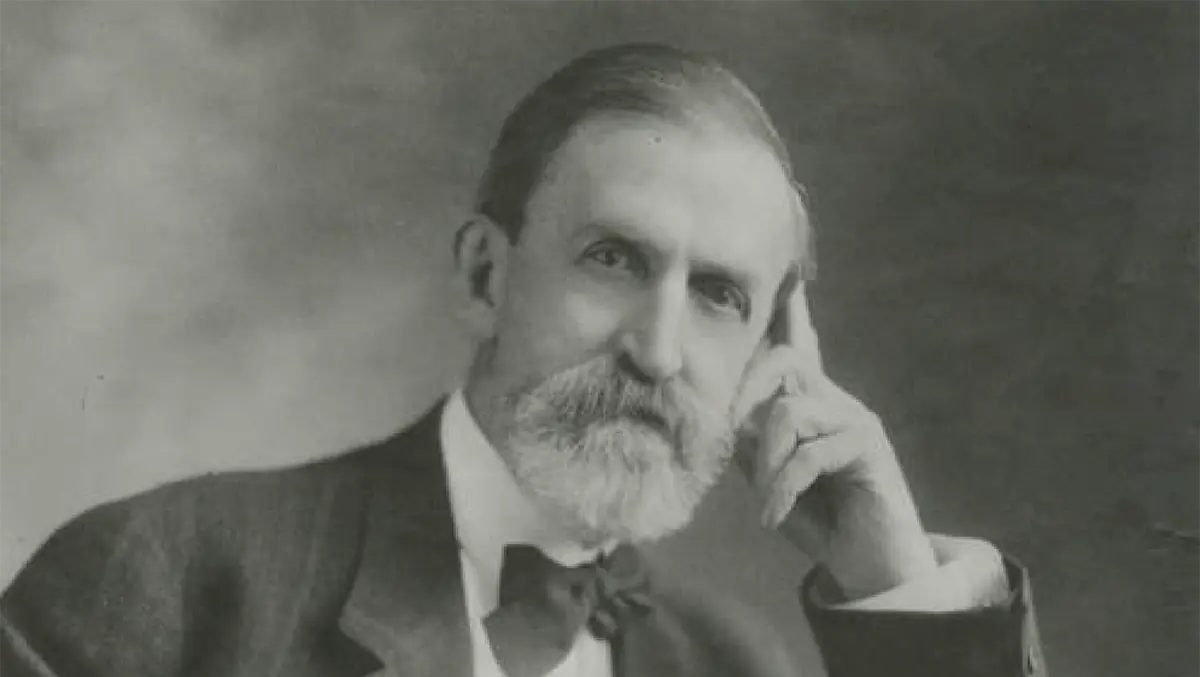
History is written by the victors, not by those who come in second place… and yet, one of St. Joseph county's major roads is named for a man who perpetually fell just short of victory.
John Kern was born into a middle-class family in 1849 in Alto, Indiana — just south of Kokomo. He was an incredibly intelligent young man, though he was persistently plagued with debilitating illnesses throughout his life. After getting his law degree and opening his own firm, he ran for the Indiana state legislature in 1870, losing the race. This loss did not deter him however, and he soon found himself appointed as the city attorney of Kokomo, a position he would hold for over twelve years.
In 1884, Kern was willing to give elections a second shot, and was successfully elected to the Indiana Supreme Court as a court reporter, though he lost reelection four years later. His major breakthrough was the election of 1892, where he was finally elected to the Indiana Senate for one term, before being appointed as city attorney again, but this time to the politically-important Indianapolis.
A subscription to the News-Times is always free.
Enter your email address and get new issues straight to your inbox.
At the turn of the century, John Kern ran for Governor of Indiana. He lost. Four years later he ran and lost again. For Kern though, these losses were not setbacks. Despite never achieving his dream to become governor, he was becoming a household name: one that people recognized in the political sphere. His most notable friend in politics was a certain William Jennings Bryan, hero of the Democrat party and pioneer of the blossoming Populist party. Bryan had already lost two presidential elections to William McKinley, but was not about to give up yet. In 1908, William Jennings Bryan selected John Kern as his vice presidential pick, campaigning as a powerful political duo, only to lose this third time to William Howard Taft.
John Kern did not get to be Vice President of the United States, but his time in the spotlight quickly catapulted him to stardom within the Democratic party. He was elected to the US Senate two years later and immediately became a leading figure for the progressives within the Democratic party. His rise to power within the Senate prompted the creation of the Senate majority leader position, which his fellow Congressmen immediately elected him to. As Senate majority leader, he worked closely with Woodrow Wilson to pass several significant bills. He passed the Clayton Antitrust Act, the Revenue Act of 1913, and the Federal Reserve Act, all of which drastically altered the economic state of the US. John Kern's time in the Senate focused heavily on organized labor laws and he frequently pushed for the abolishment of child labor. He was also a primary figure in the Paint Creek-Cabin Creek Strike of 1912, passing the Kern Resolution to investigate the more than fifty deaths caused by anti-strike law enforcement.

While in the Senate, Kern was a proponent of the ratification of the 17th Amendment to the Constitution. Prior to the 17th Amendment, all US Senators were elected by their state's legislators. In 1910, when he was elected to the Senate, Kern was chosen by other lawmakers from Indiana, but with the addition of the 17th Amendment, he would now be chosen by the general public of Indiana in the way we vote today. Unfortunately for him, when John Kern's term ended, Indiana chose not to reelect him, instead voting in newcomer Harry New. Kern's long line of political losses ended with his loss to New in 1916. After a lifelong battle with health, he succumbed to tuberculosis shortly after his Senate term expired in 1917.
In 1933, when St. Joseph County did an overhaul of their street naming system; they needed a prominent politician to be the namesake for their “K” street eleven miles south of the Michigan border. The man they chose to represent St. Joseph County's eleventh mile was John Kern, a symbol of Hoosier leadership and perseverance. He may have lost the state Senate race, the governor's race twice, the vice presidency, and the US Senate; but his political fame still cemented him a spot in our local infrastructure, nearly a hundred miles from his hometown. The only irony was that Kern's namesake road was just a short walk from New Road, named for Harry S. New, the final man to best him in a long line of lost elections.