The Pan-American Congress in South Bend
The first Pan-American Congress visited the United States in 1889. What they really wanted to see was South Bend.
BY AARON HELMAN // POSTED JUNE 2, 2026
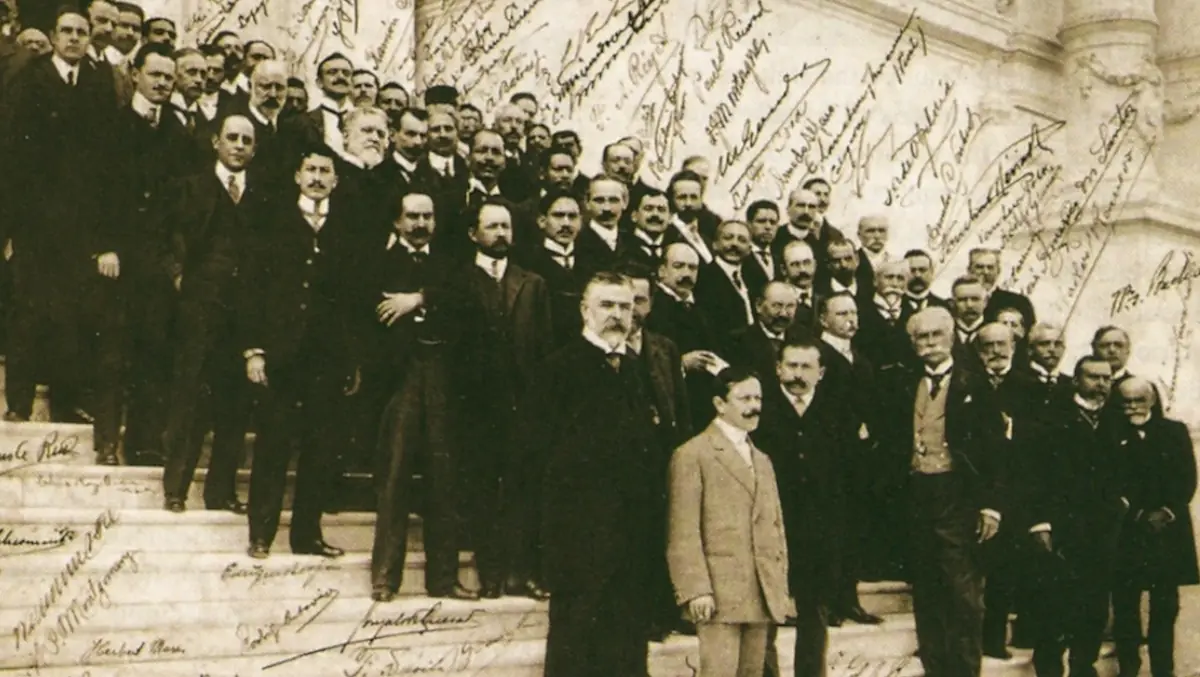
The year is 1889, and the United States of America is just beginning to flex its political muscle. The nation is barely a hundred years old, but it's already endured and survived a Civil War. Secretary of State James Blaine intends to elevate his country on the international stage, and he already has a plan.
That fall, he will convene the first ever Pan-American Congress. Political leaders from throughout North and South America will come together for discussions, negotiations, and a whirlwind tour of the United States. The delegation will include a handful of Washington's top-ranking officials and America's biggest titans of industry, at least five South American Presidents, one Prime Minister, and three Secretaries of State.
Every city in the country was invited to submit a proposal explaining why it deserved a visit from the prestigious delegation. There was only one rule. A city had to have a population of at least 50,000 people. There was only one exception.
South Bend, Indiana.
A subscription to the News-Times is always free.
Enter your email address and get new issues straight to your inbox.
South bend did not have the requisite population. It didn't matter.
In fact, while every other city in the nation was required to submit a proposal, South Bend wasn't required to do that either. It was the first city on the list, and except Washington D.C., it was the only place guaranteed a visit from the very beginning.
Why did South Bend receive such preferential treatment?
For one, James Blaine had campaigned in South Bend during an earlier Presidential run, and he recalled that the city gave him the warmest welcome he'd received during the entire tour. For another, Clem Studebaker was on the committee that put the Congress together, and the one who decided where the delegation would travel.
But mostly it was because, throughout the Americas, agriculturalists were using farm implements built in South Bend, Indiana. Studebaker wagons and Oliver plows were powering modern farms in Brazil, Mexico, Canada, and Peru. South Bend was the place that built the technology that fed families and kept money in growers' pockets.
South Bend was the place they most wanted to see.
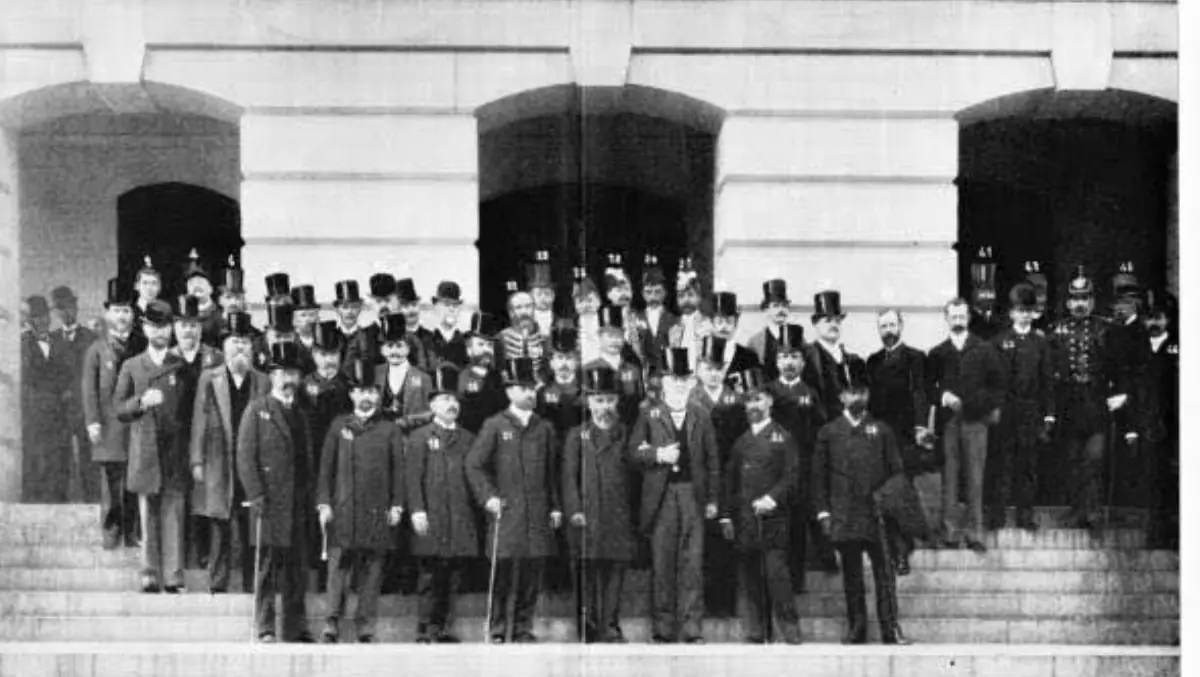
Clem Studebaker was effusive in his praise for his city. According to him, South Bend had “the largest plowmaker in the world, the largest toymaker in the world, the largest clover huller production in the world, and the largest vehicle maker in the world.”
He might have fudged the numbers a little bit to reach all those accolades, but the Pan-American Congress didn't come with a fact-checker. They took Clem at his word, and if his boasts weren't exactly accurate, then at least they weren't too far off. They wanted to see all of it, and Clem couldn't wait to bring them to South Bend.
During their one day in the city, Clem Studebaker ran the Pan-American Congress ragged with a schedule filled with engagements. They toured the factories of Oliver, Singer, South Bend Toy Company, and the AC Staley Woolen Mills. They visited the Elbel music store. They walked the river and studied the water-powered mills that kept everything running.
And then it was time for lunch.

The Pan-American Congress came to South Bend shortly after Clem Studebaker had finished construction on his brand-new mansion. He'd commissioned Tippecanoe Place exactly for moments like this, and more than anything else, he was excited to show off his grand home.
There was just one problem.
Ten days before the Pan-American Congress came to South Bend, Tippecanoe Place had burned.
The stone-built walls were mostly impervious to fire, but the insides weren't. Anything made of wood — which included all of the furnishings — was reduced to cinder and ash. Crews tore everything out of the home and dumped it on top of the place that would become Howard Park. There was no time to put anything back. There was no time to remediate the smoke.
And so there they were: Clem Studebaker, James Blaine, and the most significant international delegation the United States had ever seen, dining at a picnic table inside the charred remains of Clem Studebaker's new house. If anyone had any complaints about the arrangements, they didn't voice them, and why would they?
They wouldn't have missed the trip to South Bend for the world.