Why Is It Called Dragoon Trail?
The popular answer is a legend that doesn't hold up to scrutiny.
BY AARON HELMAN // POSTED AUGUST 20, 2026
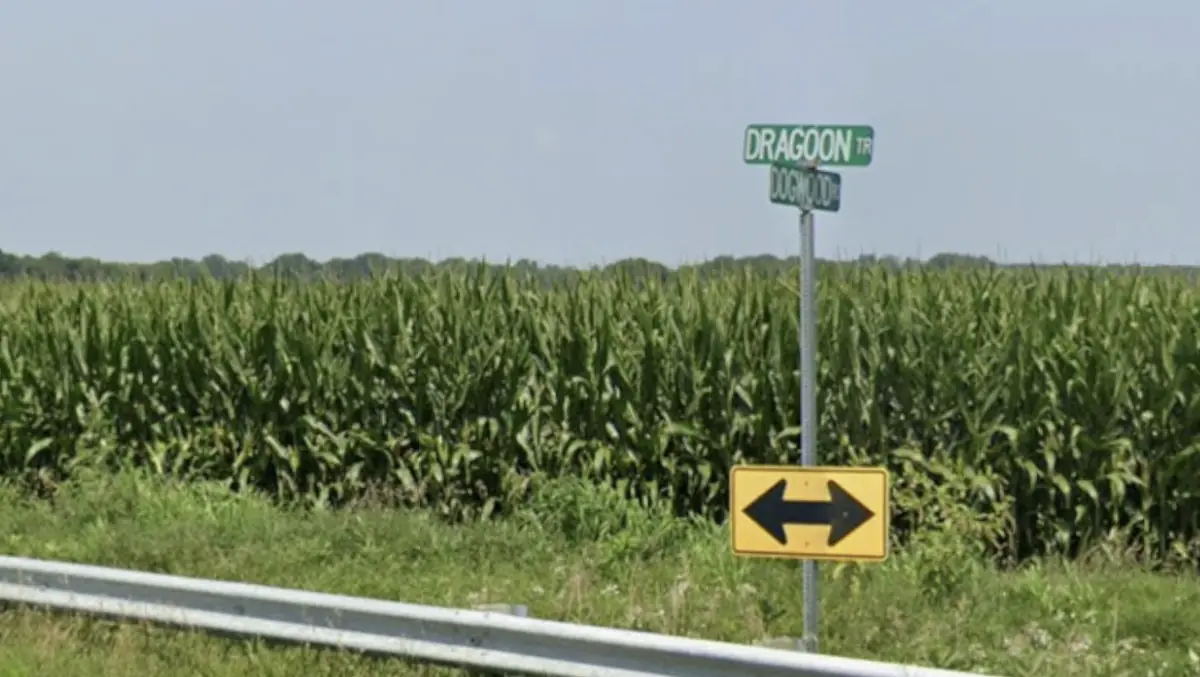
There's a story about how Dragoon Trail got its name.
I'm not sure I believe it.
The story comes from a history of Osceola, Indiana, and it claims that the road was named for the British Dragoons who rode the trail between Fort Wayne — when it was still a fort and not yet a city — and Fort Dearborn in modern-day Chicago. It's a tidy little theory that raises a few obvious questions, starting with:
What's a dragoon?
In the old days, armies were made up of two distinct branches: cavalry and infantry. Infantry marched into battle and fought with their hands and their guns and their bayonets. Cavalry rode through and fought from horseback. Dragoons were something in the middle. They rode horses into battle but dismounted for close-quarters fighting. They were highly mobile and rapidly deployed infantry, the air-assault troops of their day.
So if Dragoon Trail was named after British specialty units stalking the Indiana frontier in the years after America's revolution, then the name feels more ominous and frightening than anything else.
But the story doesn't quite hold up.
A subscription to the News-Times is always free.
Enter your email address and get new issues straight to your inbox.
The British Dragoon story has a calendar problem, and it's a big one.
Fort Wayne was built in 1794, and it's named for Anthony Wayne, the General who built it. It was never captured. It never flew a British flag. Fort Dearborn came a few years later and was American from the moment it was built.
That doesn't mean there weren't men on horses traveling the trail between the two forts, but according to the historical marker in Fort Wayne, those men were American mail carriers...
...not British Dragoons.
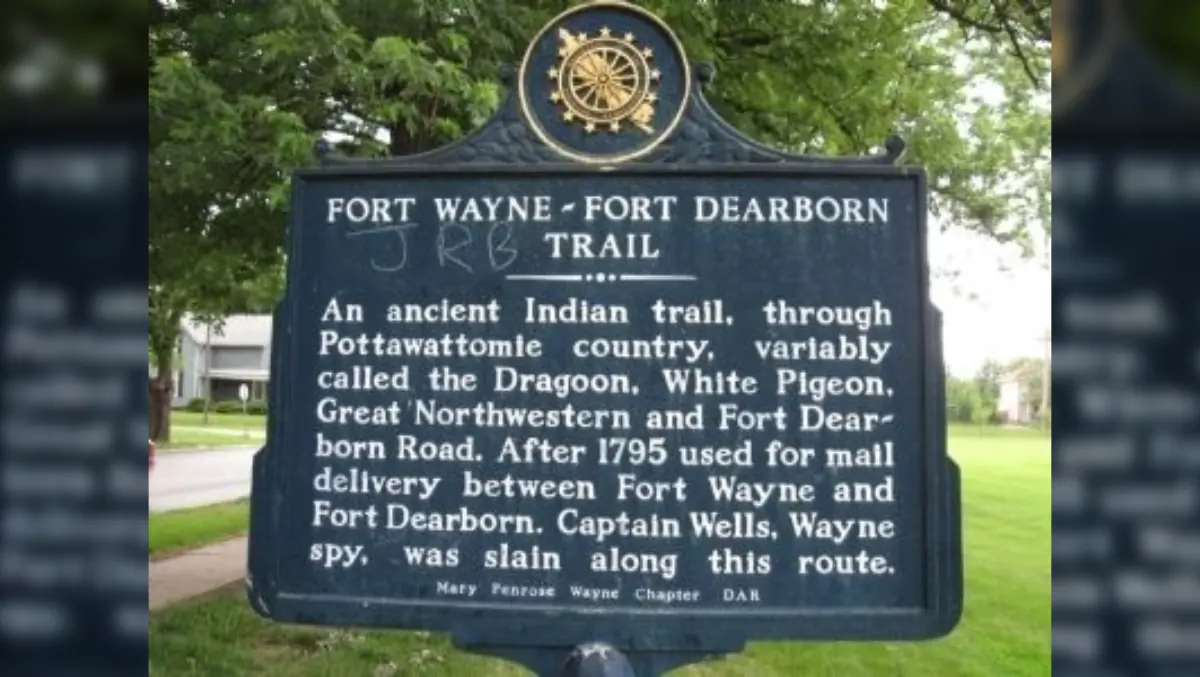
The historical marker in Fort Wayne does not mention anything about dragoons, British or otherwise. It only mentions that Dragoon Trail is one of the many names that the old road has come to be known by. In his History of St. Joseph County, Timothy Howard calls the road Dragoon Trace, but he doesn't go so far as to put any dragoons on it.
It doesn't necessarily mean there weren't any. There were certainly American men on horseback stationed at Fort Wayne. But if they had any epic reason to ride the trail regularly enough to name a road, it doesn't make the historical record, and it seems like the kind of thing that probably would.
So if there weren't dragoons, then where exactly did the name come from?
Probably from the place these things usually come: rumors and legends and misrememberings.
Is it possible that settlers mistook horsebacked mail carriers as dragoons and passed the story along? Sure. Is it possible that the rumor mill remembered British dragoons sacking Fort Dearborn and besieging Fort Wayne during the war of 1812 instead of the Native Americans who actually launched those attacks? It could be.
Whatever it was, Dragoon Trail got its name — almost certainly — not from anything that actually happened along the old road, but for something that tall tales remembered along the way.
Which is a shame, because the road has a real and verifiable history, and it's older than any of this.

The Dragoon Trail is older than Fort Wayne and Fort Dearborn. It's older than America. It might be older than the British Dragoons.
The three most important portages across the area's continental divide were at the places that would become Fort Wayne, South Bend, and Chicago. Of course there would be a road that connects two of them and passes through a third. No wonder early fur traders called it the Great Northwestern Road.
Native Americans no doubt had their own name for the trail, but the name hasn't survived. Instead, it's Dragoon Trail, named after warriors who were probably never here, and who would be just as surprised as I am that there's a road named for them in northern Indiana.