Why Is It Called Pulaski Street?
Condemned to death by his own king, he crossed an ocean and saved George Washington's life. South Bend put his name on a street.
BY AARON HELMAN // POSTED AUGUST 13, 2026
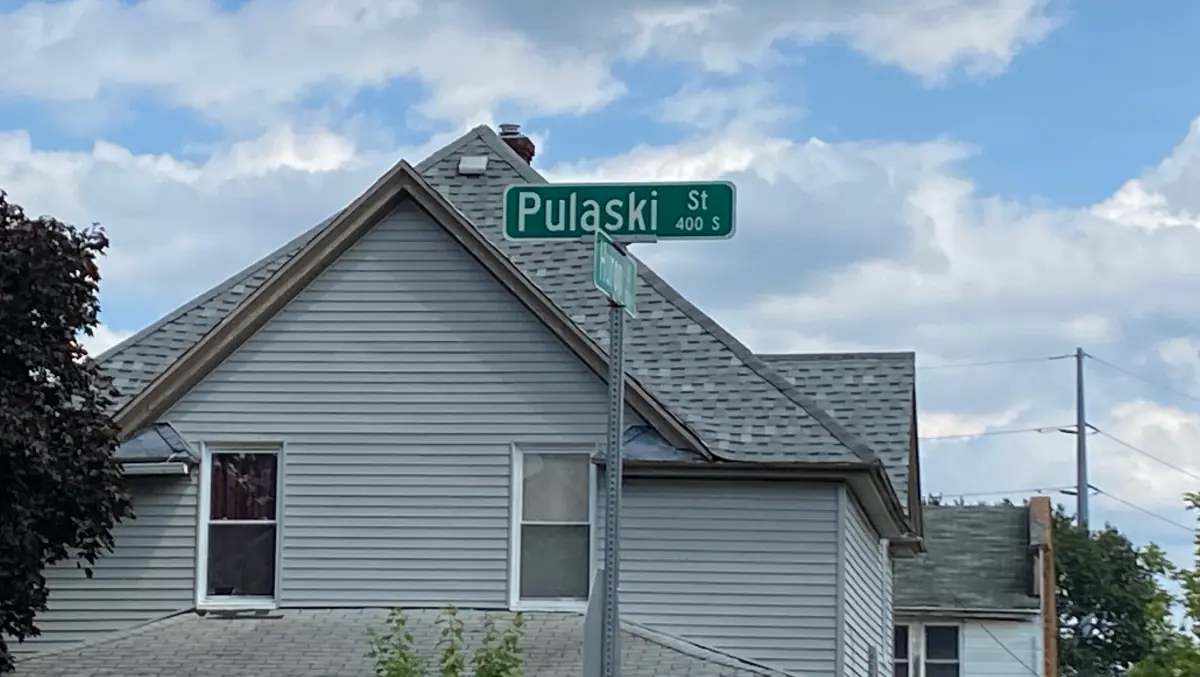
Pulaski Street carves a short and broken line through South Bend's westside, a Polish name through a historic Polish neighborhood, a block past Kosciuscko Street, right where it belongs. There's a Pulaski Park not too far away, and if you drive southwest for an hour from there, you'll find yourself in Pulaski County, Indiana.
The name is all over the map, honoring Casimir Pulaski: a forgotten fallen Revolutionary soldier, killed by the British in 1779, a man never made an American citizen until 230 years after his death.
It feels like an exaggeration to claim that everything might have turned out differently if it wasn't for one man, but in this case, it's not just an expression. It's the truth.
That's because, among many other things, Casimir Pulaski is credited with saving George Washington's life at the Battle of Brandywine.
A subscription to the News-Times is always free.
Enter your email address and get new issues straight to your inbox.
Casimir Pulaski was born in 1745 to Polish nobility, and he became a renowned war hero in his home country before America ever had a Declaration of Independence to sign. He had revolution in his blood. Pulaski's father helped lead an uprising against Russian forces who sought to dominate Poland and the Polish king who allowed it to happen. Young Casimir was tasked with holding a monastery against a Russian assault in 1771.
He held it. He became famous for it.
When you were on the wrong side of your king, it wasn't a good thing to be famous.
Pulaski was charged in a plot to kill the Polish king and condemned to death.
He wandered Europe for four years as a well-known military commander who had a thing for regicide. That didn't make him employable to any nation that had a king, but on the other side of an ocean, there was a struggle for a new nation that promised it wouldn't keep its own royalty.
Pulaski was intrigued.
He also didn't have many other choices.
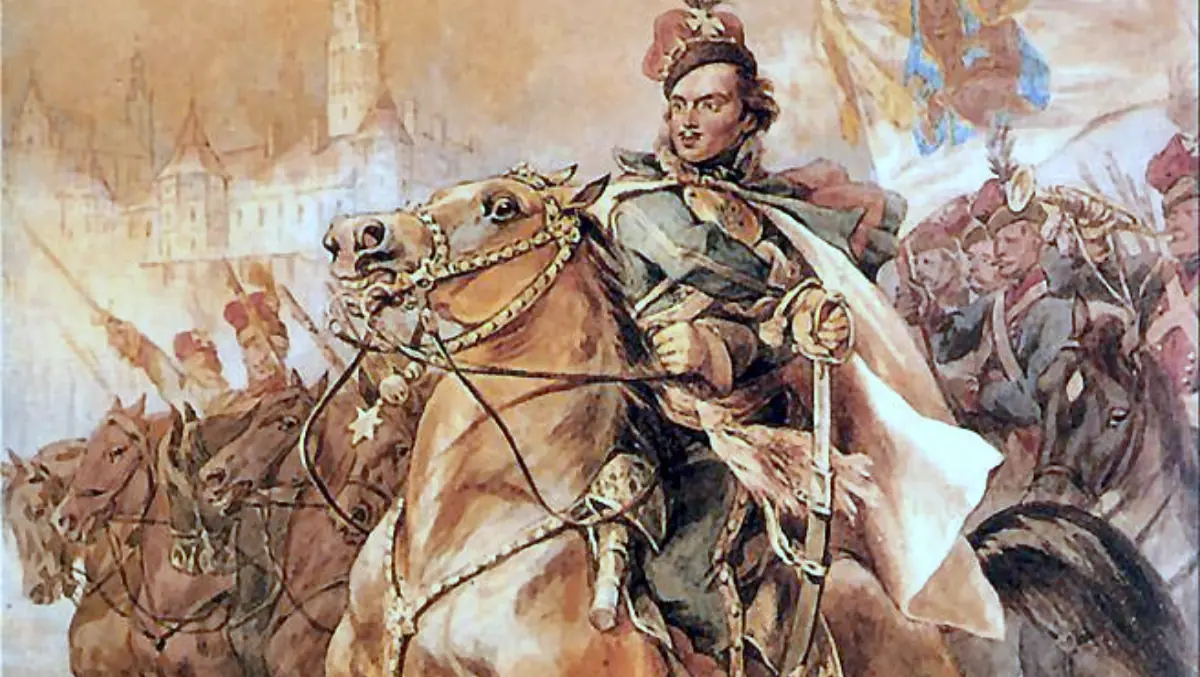
Benjamin Franklin himself recommended Casimir Pulaski to General George Washington, and they struck a deal while the Revolution was still young. Pulaski sailed for America in 1777. He wrote a letter to General Washington on the way:
"I came here, where freedom is being defended, to serve it, and to live or die for it."
It wasn't long before he got the chance to prove it.
On September 11, 1777, Washington's forces were facing defeat at the Battle of Brandywine. The battle hadn't gone well for them, and the retreat wasn't going much better. The British were closing in faster than the Continental Army could escape, and the Redcoats were eager to claim the bounty that sat on Washington's head.
Pulaski led a small detachment of men on horseback and charged the British column. It was probably reckless. It probably rescued the retreat.
It saved George Washington's life, and Washington knew it. He made Pulaski a brigadier general and gave him orders to raise up a cavalry. To this day, Casimir Pulaski is still known as the Father of the American Cavalry.

Casimir Pulaski promised to live or die to defend freedom. By 1779, he'd done both.
Pulaski took a load of grapeshot at close range during the Siege of Savannah in October of that year. He died a few days later on a ship, and for a long time, no one was exactly sure what happened to his body. Was he buried at sea? Did they bring him ashore to put him back into the earth? Whatever it was, it existed for a long time as folklore more than fact.
Until 2019.
That's when anthropologists took a DNA sample from a set of bones that had been supposed to be Pulaski's since the 1850s. The DNA was a match, and since Pulaski never had any children of his own — and since none of his other relatives had reason to be buried in the late 1700s in Savannah — that meant that the skeleton was confirmed as that of Casimir Pulaski.
The only problem was that the skeleton was objectively female.
So was the DNA.
That's led some experts to posit the theory that Casimir Pulaski was intersex, and there's more evidence for the claim than what they found in those old bones. As an infant, Pulaski had been baptized at home instead of at the church. The reason given was that he had an unexplained "physical debility".
South Bend knew none of this when they named Pulaski Street in 1896 or when they christened Pulaski Park in 1935. At that time, all they knew was that Casimir Pulaski was a great Polish hero of the American Revolution, one who never saw American freedom secured, and one who wouldn't get to call himself a citizen underneath its flag for a very long time.
In 2009, Congress made Casimir Pulaski an honorary United States citizen, one of only eight people ever granted such a distinction.