William Miller: Third Mayor of South Bend
He survived the gold rush, a cholera epidemic, and a mill fire that wiped out his fortune. Then he became mayor of South Bend.
BY AARON HELMAN // POSTED JUNE 22, 2026
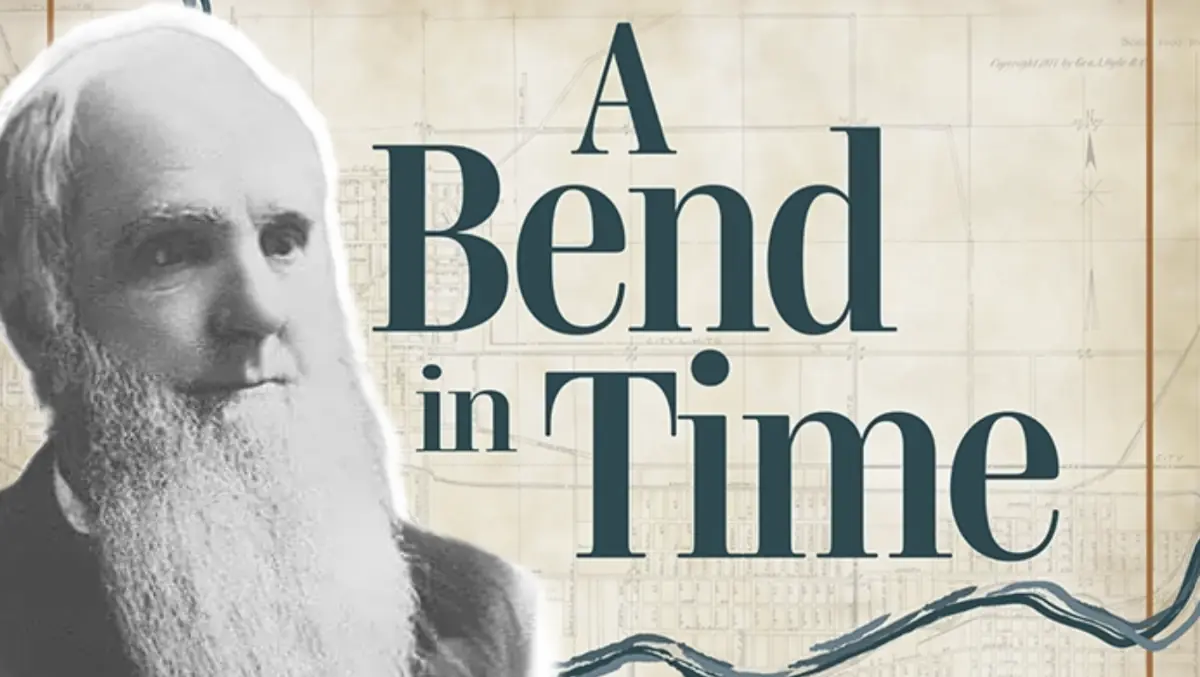
Welcome to a historian's living nightmare.
We're in the pages of old newspapers, eyes bleary and weary as we pour through one page and another trying to track down information about South Bend's third mayor, but there's a problem.
There are two William Millers, and they're just about impossible to tell apart.
They were both there when South Bend was incorporated in 1865. They were both on the first city council. They were both Republicans.
William Miller and William Miller.
And that's just the start of it.
A subscription to the News-Times is always free.
Enter your email address and get new issues straight to your inbox.
Both William Millers were married, and both William Millers married women named Mary. They both found success as businessmen in South Bend, and you'll never guess what industry they were in.
They were millers. Both of them.
They had sons. They passed their names along to their sons, and then they passed along their businesses. For a while, after the kids grew up, there were four men in South Bend who could claim to be William Miller the miller.
At one point, the elder Millers went into partnership together, opening the Miller & Miller mill. They drew up estate plans to make sure that the business passed in equal parts to their sons. If you're keeping score at home, that means that:
William Miller the miller and William Miller the miller willed the Miller & Miller mill to William Miller the miller and William Miller the miller.
So how can we possibly tell these two guys apart?
Well, one became the city's fire chief.
The other became the mayor.

William Miller the Mayor was born to a farming family in Lebanon County, Pennsylvania in 1821 and arrived in South Bend at the age of sixteen, part of a family migration that included his parents and eight brothers and sisters. He received a brief education and set off to work. He was there, armed with a shovel when the city fathers dug the East Race.
He took his earnings and went west, first to pan for gold in California and then to build the bridges that would carry the Gold Rush from boom to bust and back again. He made more money building railroad bridges than he did panning for gold, and then for some reason, he made for St. Louis. When a cholera outbreak killed hundreds throughout that city, Miller came back to South Bend.
He took his western riches and went into business with Alexis Coquillard. They built a mill, which was supposed to be the safe investment. It wasn't. Three months after Miller bought in, the mill burned to the ground. Coquillard died inspecting the wreckage. The mill had been uninsured, and Miller's gold rush earnings went with it.
Another man might have quit at this point, and no one would have blamed him. Miller instead found a new investor, rebuilt the mill, and reopened it in 1855, this time with a tin roof and, notably, an insurance policy.
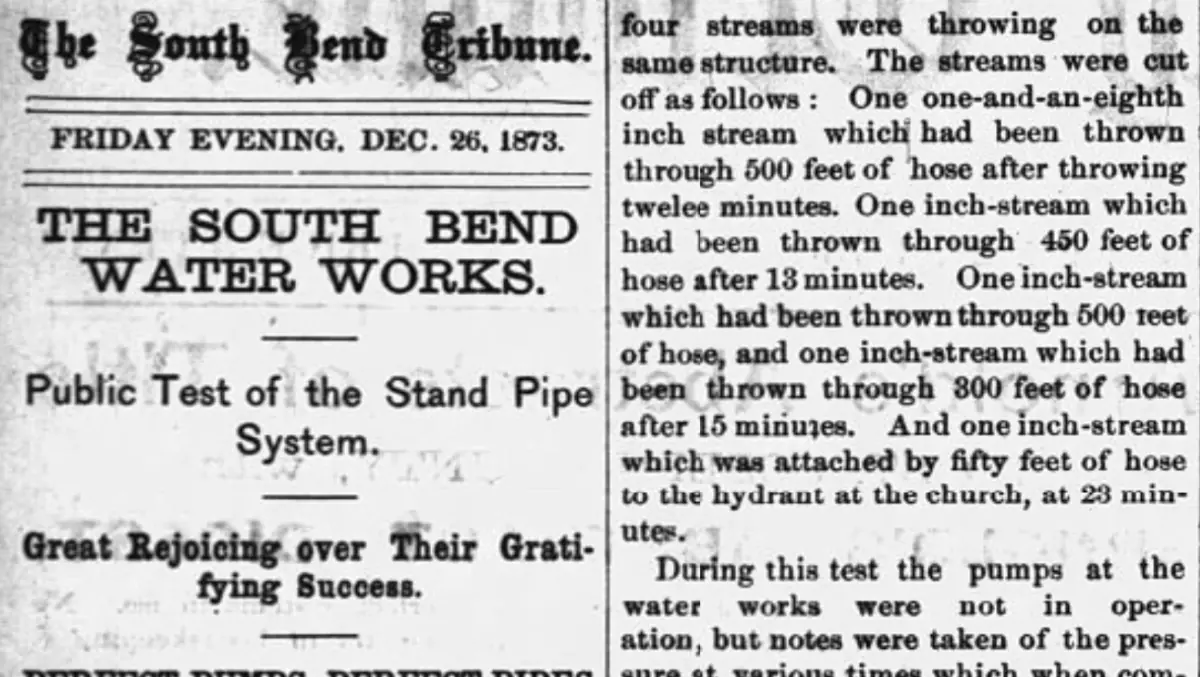
In 1872, Miller became the mayor of South Bend with two-thirds of the vote, replacing Louis Humphreys in the office. Miller's tenure would be defined largely by the great water works debate — a years-long civic argument so bitter that it dissolved lifelong friendships, scrambled political parties, and ultimately ended with John Studebaker getting soaked on the roof of his own factory on Christmas Day.
When the Republican primary of 1874 collapsed into procedural chaos, Miller withdrew from the race in protest. Three weeks before the election, three hundred and thirty prominent South Benders signed an open letter asking him to come back as a third-party candidate. He did. He won, carrying forty-two percent of the vote in a three-way race — the first time in the city's history that the mayor was not, at least officially, a Republican.
He left office in 1876 with the formal thanks of the City Council and a city that had, by the end of his tenure, paved roads, gas-powered streetlights, a railroad, functioning schools, and running water. A great deal of that happened on his watch, and most of it happened in spite of everything else that was happening to him at the same time. His successor was Alexander Napier Thomas.
William Miller died in 1901 at the age of seventy-nine and is buried in the City Cemetery. The other William Miller — the fire chief, the one whose mills and sons and Marys have been tangled up with his in the historical record ever since — outlived him by four years.