They Called It The Trail of Death. They Weren't Exaggerating.
In 1838, the Potawatomi were forced from the land around South Bend. At least 42 of them died on the march.
BY AARON HELMAN // POSTED AUGUST 10, 2026
There are moments that make a city like South Bend. The discovery of a portage trail that spans a continental divide. The arrival of the fur traders who would become townbuilders. The drawing of the Michigan Road right through town.
And yes, the removal of the Native Americans who had been here for thousands and thousands of years before the word settler.
Not every formative moment is a good one, and this one certainly wasn't. It was formed in deceit and domination and dishonesty. It ended in devastation and displacement.
They called it The Trail of Death.
They weren't exaggerating.
A subscription to the News-Times is always free.
Enter your email address and get new issues straight to your inbox.
The American government had been removing Native Americans from Indiana since long before the territory became a state. Treaties with confusing terms were signed by chiefs plied with copious amounts of alcohol and then enforced against bands who were never actually involved in the first place. Tens of thousands of Native Americans had already been marched away from Indiana by the time South Bend had a name.
But the early removals tended to turn a blind eye toward northern Indiana. For one, the northernmost parts of Indiana were still technically a part of Michigan during the territorial days. For another, Native Americans were crucial pieces of the fur trade machine, and so long as people were making money selling furs, no one wanted to remove the people who were pulling them from the wilderness.
Then the fur trade died.
That's when the effort to remove the northern Indiana Potawatomi intensified, and it didn't take too long after that before it turned deadly.
There were those who signed the treaties. Removal was inevitable. For many, signing a contract — even an unfair one — was a defensible and logical choice. For many, it was better to leave peacefully with something than to leave violently with nothing. Unfortunately, those signers were going to find out that the something didn't last very long. For that matter, neither did the peace.
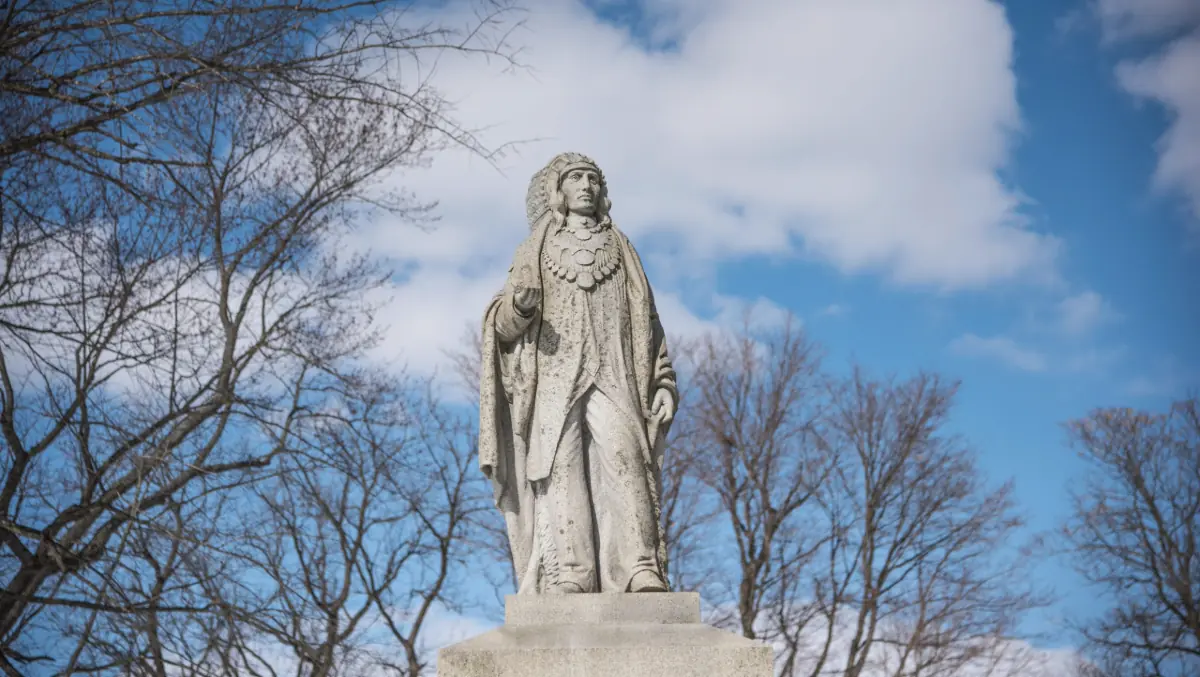
Then there were the holdouts. Chief Menominee was one of them, and he spoke for all of them. Federal negotiators tried to get him drunk. He didn't drink. They tried to forge his signature. He called them on the lie. They tried to apply pressure. Menominee might have seemed immune to it.
By 1838, Menominee was the loudest and most visible holdout in the region. Native Americans took notice and left their own tribes to join Menominee's, hoping against hope that if he refused to leave, then they wouldn't have to leave either.
Unfortunately, the government took notice too.
In the end, Menominee and all of his people were removed entirely by force. He never signed away his land. He never received any compensation for what had been taken from him.
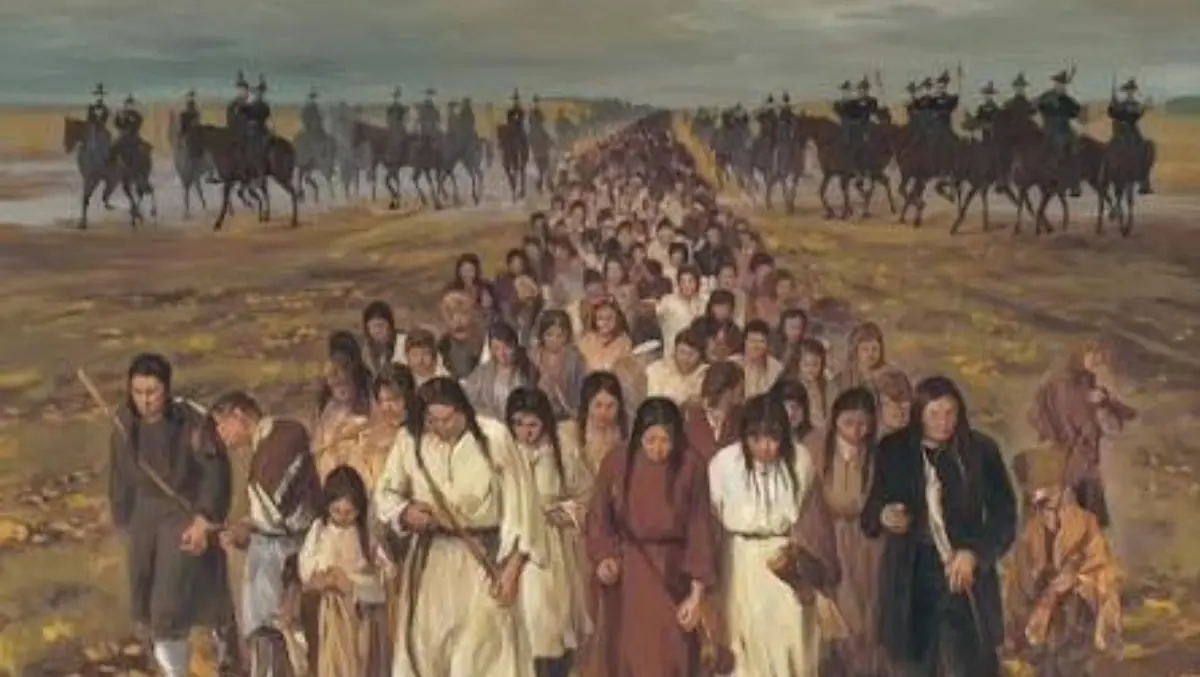
Men with horses and guns gathered 859 Native Americans and pointed them west. Before they marched out, forces burned the crops and wigwams that Menominee in his people had labored over. The message was simple:
There will be nothing to come back to.

The caravan that took Menominee and his people included 859 Potawatomi men, women, and children. It included 286 horses and 26 wagons. It included an armed escort of a hundred soldiers. It did not include enough food, or enough wagons, or enough medicine.
It was rare that a day went without someone dying, usually a child.
When the caravan stopped at Danville, Illinois, they dug six graves and they filled them.
The official record claims at least 42 deaths, at least 28 of them children.
There were almost certainly more than that. The official record stops counting on November 4, 1838, when the caravan reached eastern Kansas. That was where the Potawatomi were left to fend for themselves; malnourished and exhausted. There was no housing waiting for them. There were no farms and no food. Winter was just a few weeks away.
The record doesn't tell us how many made it to spring.