The Michigan Road That Saved South Bend
The town was built on a portage that was dying. It was rescued by Indiana's first major road.
BY AARON HELMAN // POSTED SEPTEMBER 1, 2026
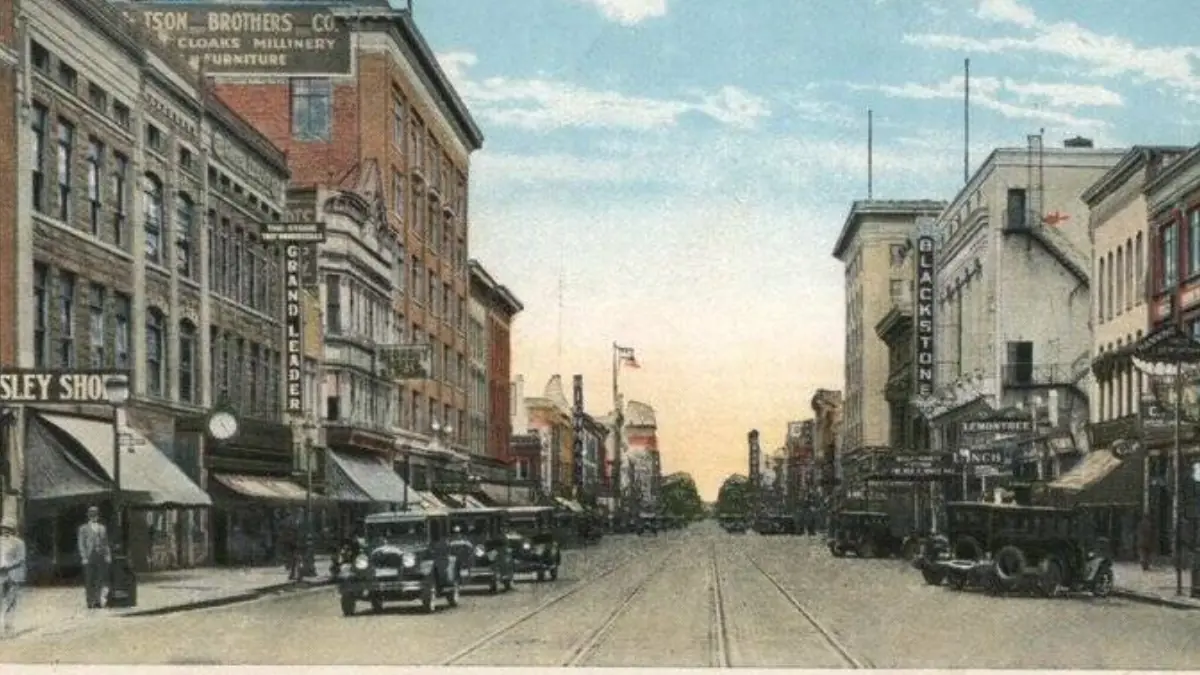
In the 1820s, Indianapolis was more an idea than a city, and Hoosier leaders were trying to figure out exactly how people from across the state were supposed to get to their new capital city. They were there, several of them, hunched over a table or a desk, each armed with pencils, spitballing ideas for the state's first great road.
They were going to call it Michigan Road, and it would connect all of the important parts of the state: the river towns along the Ohio River where most of the state's population lived, through the capital in Indianapolis, and all the way to the shoreline they'd managed to secure on Lake Michigan and where they expected to realize wealth for generations.
In every way, the Michigan Road was meant to connect Indiana's past, its present, and its future.
All they had to do now was decide where to put it.
A subscription to the News-Times is always free.
Enter your email address and get new issues straight to your inbox.
It was easy enough to draw a straight line on a map, and plenty of men did exactly that. A straight line from the capital to Lake Michigan runs 140 miles. Men with pencils and a map knew exactly where the road was supposed to go.
The people who had to build the road had other ideas.
Surveyors followed that straight line into northwest Indiana until they ran to the Grand Kankakee Marsh, and they realized immediately that there was no running a road through the wet and muck that continued for miles in all directions. At least not if you wanted the road to still be there a season later.
The report back to Indiana Governor James B. Ray was disheartening, but it was inevitable. The road would have to be longer. It would have to be more expensive.
And it would not be straight.
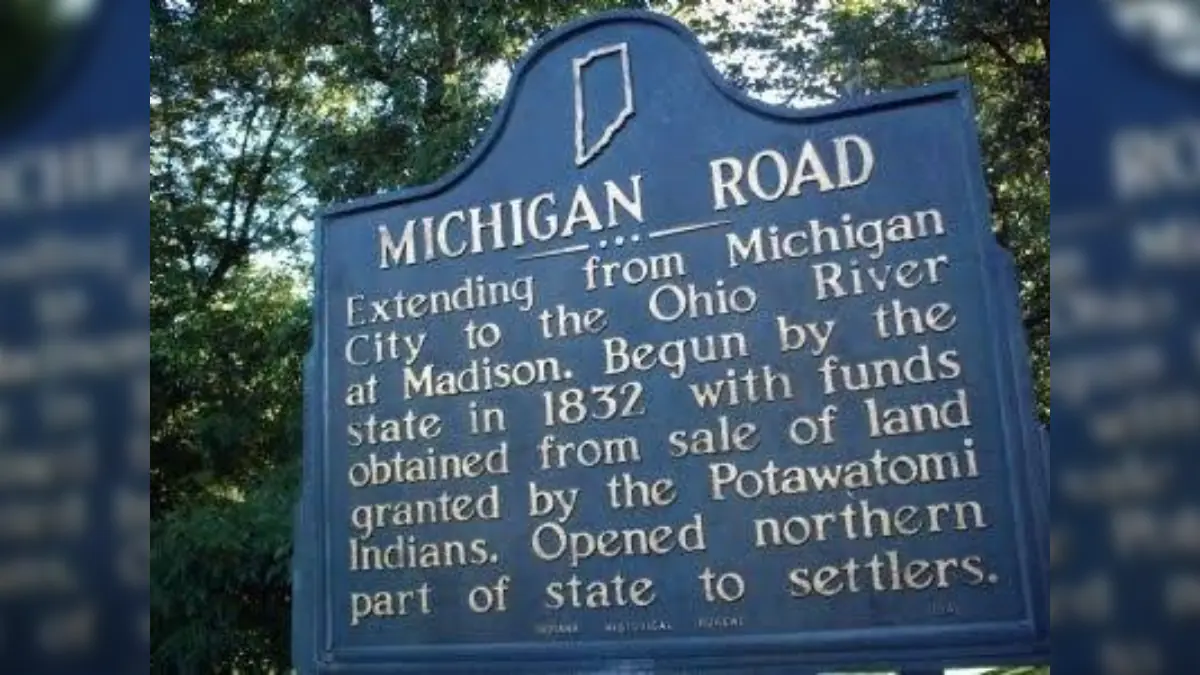
By the time the state was ready to lay the road, South Bend was a town already running out of reasons to exist.
The town had been founded by fur traders who set up shop along the historic St. Joseph—Kankakee Portage. For generations, it was the place everyone passed through on their way to somewhere else. When Pierre Navarre came in 1820, it was to capitalize on the traffic. Same reason Alexis Coquillard and Lathrop Miner Taylor opened their own trading posts and eventually founded a town.
But by the late 1820s, portage traffic had plummeted. The fur trade had collapsed thanks to diminishing supply and cratering demand. The Potawatomi — who had always been the most profitable trading partners were slowly being pushed out and relocated. They'd be gone altogether by 1838. Railroads and steamships would render portages irrelevant during the next decade after that.
South Bend had been built by men who traded with Native Americans along one of the most crucial trails in the continent. The town had barely gotten started by the time the trail and the Native Americans were gone.
Whether South Bend became a city or a footnote was something of an open question. They needed another road, and they needed new people to travel it.
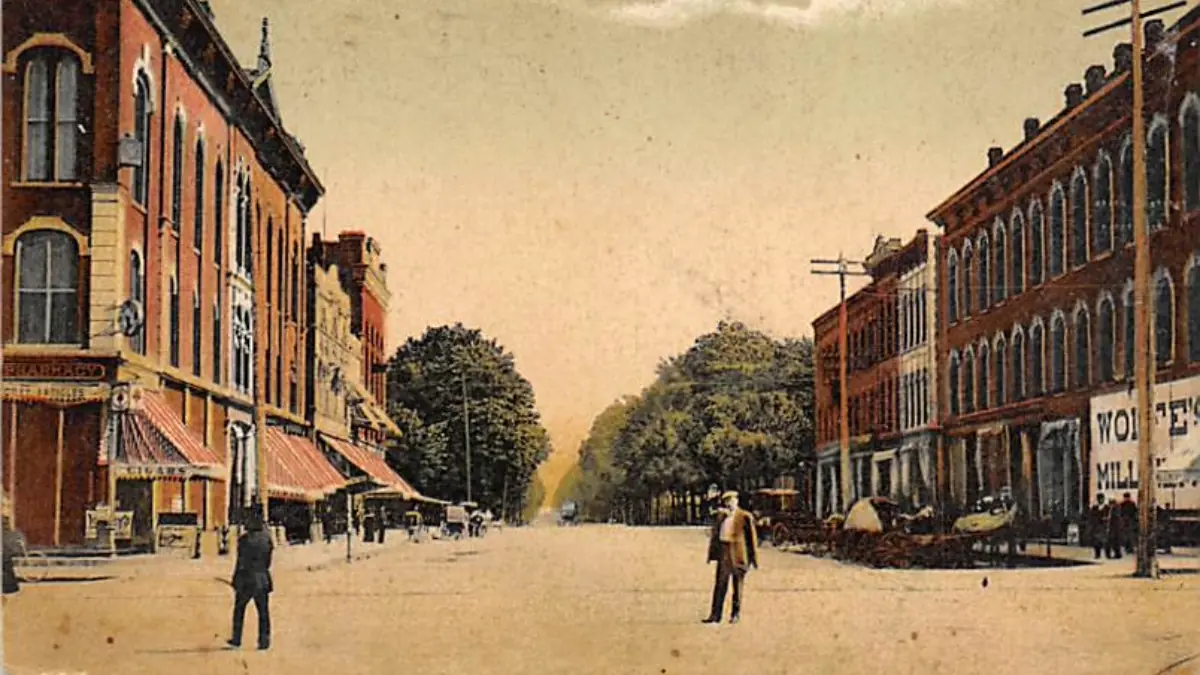
The Kankakee Marsh deserves at least half the credit for building South Bend in the first place. After all, a portage requires water on both ends, and while we think about South Bend today as a town built on a river, the truth is that for the earliest settlers, South Bend was a town built on two of them. The city sits in the space between where the St. Joseph is and where the Kankakee was.
The Kankakee Marsh might also deserve the lion's share of the credit for saving the town from evaporating before it even got started. When the surveyors dragged themselves from the mud of the marsh and took their report back to Indianapolis, the men with the maps and the pencils were forced to draw a new line.
This one went north to South Bend, where it turned west toward an empty spot on Lake Michigan that would later become Michigan City.
The road came just in time.
At exactly the moment that folks stopped travelling the highway that had been the portage, they started travelling the new road.

The road built places everywhere it went. Towns strung themselves along it — Lakeville, La Paz, Argos, and dozens of others. They were towns that had no reason to exist except that the road ran past their front door, and travelers were often looking for places to rest and things to buy.
In South Bend, a fur trading outpost that had lost its purpose, the road brought a spark of life that the town would never relinquish. It got the county seat in 1831, because it was the most important town on the most important road. The railroad came in 1851, and then it grew into a manufacturing city that built wagons and automobiles and sent them everywhere, because South Bend was the kind of place connected enough to send things everywhere.
The Michigan Road is still there, but you might not know you're driving it. Around South Bend, it's stretches of US-31, US-20, and old State Road 933. Some of those names are new names, but in downtown South Bend, it's still got the old one:
Michigan Street, named not because it goes to the state of Michigan, but because it was part of a long and historic route that took you the long way — and the only feasible way — to Lake Michigan.