Alexis Coquillard: Founder of South Bend
The story tends to make him a squeaky-clean figure. The truth is a lot more complicated.
BY AARON HELMAN // POSTED OCTOBER 1, 2026
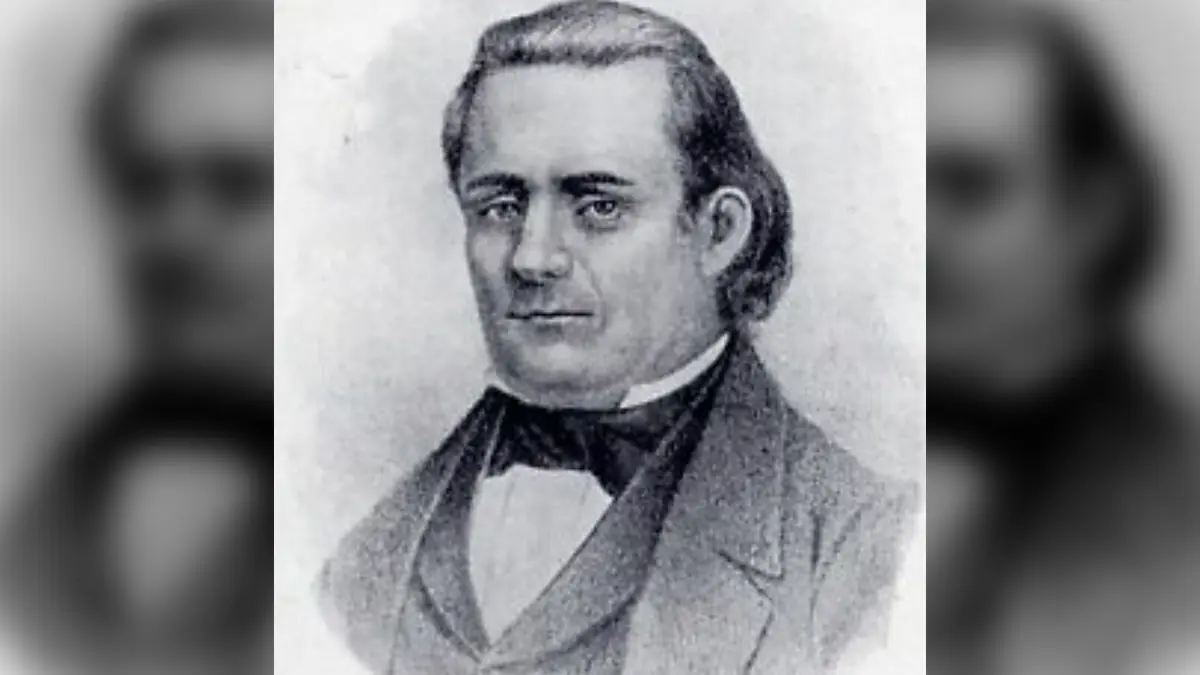
There's a version of the Alexis Coquillard stories that gets told in sound bites whenever it's time to revisit the founding of South Bend. And whenever it happens, Coquillard is right in the middle of it, exactly where he belongs:
The fur trader who looked at a bend in the river and dreamed a city into existence.
It was 1831 when Coquillard and his fur-trading rival Lathrop Miner Taylor recorded the plat for a new town in northern Indiana that had no courthouse, no church, and hardly any people. By the time Coquillard died, the place he had dreamed became everything he hoped for and more.
So that part of the story isn't wrong.
It's just sanded down, and as it usually tends to be, the truth is more complicated.
A subscription to the News-Times is always free.
Enter your email address and get new issues straight to your inbox.
Alexis Coquillard was born in Detroit in 1795 when the place was a fur trading most more than it was a city. His family was French Canadian, but they'd been on this side of the Atlantic for generations. They'd built lives, and they'd built connections.
When he was just 17, Coquillard enlisted to fight with American forces during the War of 1812. He served under William Henry Harrison, and when the war ended, he entered into the business of fur. He was hired on to John Jacob Astor's American Fur Company, and he became a relatively small cog in a very large machine that was on its way to making Astor the richest man in America.
Whether the result of good fortune or good connections, Coquillard was assigned to work the southernmost bend of the St. Joseph River. He was to take over the post that had been run by Pierre Navarre. His post sat at just the about the epicenter of the fur trade. Furs coming off the Grand Kankakee Marsh passed along northern Indiana's historic Kankakee Portage trail, and Coquillard was the man best positioned to buy those furs and pass them along to the larger market.
It was 1824 when Coquillard arrived, and his post's place on the portage might have seemed like a cheat code. Money came quickly. Money came easily.
But it wouldn't come forever.
The fur trade dried up in the early 1830s. European tastes changed. Overhunting made it more difficult to get furs from the marsh. The supply curve and the demand curve were moving in the wrong directions at the same time.
And when the fur trade dried up, so did Coquillard's livelihood. It had been bad enough when Taylor came to town to set up a rival trading post for a different trading company. For a few years, the rivals had been forced to divide the profits between them, and quickly, there were no more profits left to divide.
They needed a different plan, and they were going to need to work together to achieve it.
They needed a town, and they were already sitting at a pretty good place for one.
The logic was the same logic that had brought them there. The portage that made the bend valuable for canoes would make it valuable for wagons. When the state laid out the Michigan Road, a swamp to the west bent its route straight through the bend. And the river itself, dropping hard as it turned north, could turn mill wheels. Settlers would need land, flour, lumber, and a place to file their deeds. Whoever owned the bend could sell them all of it.
In 1831, Taylor and Coquillard both recorded the plat. They'd created a town. Now they needed to make it grow.
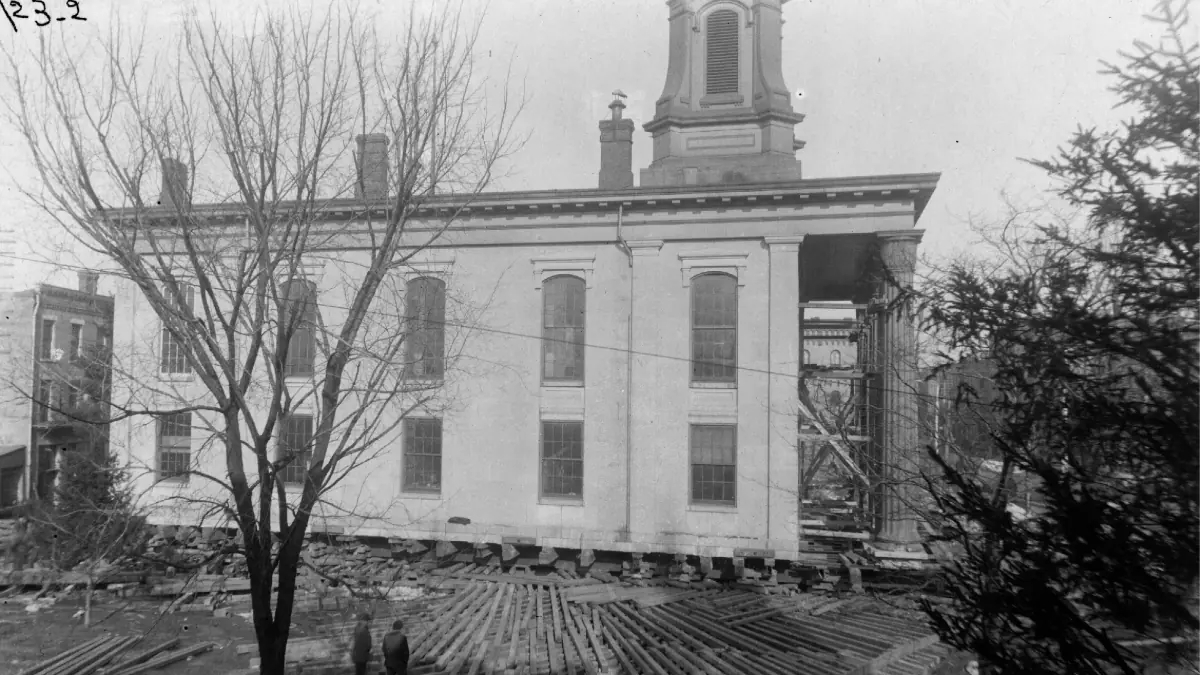
The first thing they needed to do was secure the county seat, and that was easier said than done. Everyone who platted a town wanted the seat for themselves, and Coquillard tilted the odds in favor of South Bend the best way he knew how.
With money.
He put up a $3,000 bond, the seat came to South Bend, and so did the economies associated with it. Most importantly, a courthouse, which meant that South Bend was where the lawyers wanted to work. It also meant that everyone with a deed to record, a debt to collect, or a marriage to make official needed to come to South Bend to do it.
If you're thinking that Coquillard might have breathed a sigh of relief when he saw the seat in the center of his town, you're wrong. Founding a town had been the easy part. Making it pay the way the fur trade used to was going to be much more difficult, and the truth is that Coquillard was never going to be able to make it happen.
His first scheme was a boat that could ship flour from South Bend all the way to Lake Michigan. He commissioned construction, loaded the thing with meal from local mills, and sent it on its way.
But the river was too shallow. The boat came back too damaged from the first journey to make a second. Coquillard had not nearly recouped his costs.
The second scheme was even more ambitious and more disastrous. His attempt to cut a ditch through the city that he called the Kankakee Mill Race left him bankrupted and foreclosed. The boat disaster had cost him his money. The Mill Race had cost him his land.
Coquillard's foreclosure goes a long way toward explaining what happened next, but it sure as hell doesn't excuse it. Strapped for cash and needing a way to make money fast, Coquillard signed on to do a job that should have been unconscionable a decade earlier.
He signed on to assist with Potawatomi removals.
The Potawatomi had once been his closest trading partners. The stories tell that they'd been his friends and that they were the ones most responsible for helping him make his money during the fur trade days. One old legend — which feels more apocryphal than fact — tells that the Potawatomi tried to make him their chief.
But when the government needed someone the Potawatomi trusted to negotiate their exit from northern Indiana, they turned to Coquillard and offered him a paycheck at exactly the moment he most needed one.
Coquillard worked as something the government called a conductor and he was tasked with locating people who had evaded earlier removals at a salary of $100 a month plus a dollar a day for travel.
By 1846, the job was done.

Coquillard never stopped building mills. After the first dam went across the St. Joseph at South Bend in 1844, he put up a modern flour mill on the northeast corner of what is now Colfax Avenue and the river.
That mill burned in January 1855. When Coquillard went to inspect the ruins, he fell from a beam and bashed his head against the floor. He was dead within the hour.
On the day of his funeral, every business in South Bend closed. By then, that meant an awful lot of businesses. Notre Dame took a similar pause, recognizing that Coquillard had not just been a founder of South Bend, but an early father of Notre Dame. Father Sorin named a street in his honor: St. Alexis Street. It kept that name for a few years.
The newspapers wrote glowingly about Coquillard's life and his role in founding the town. As obituaries tend to do, they didn't mention his business failures or the unsavory role he'd played in assisting in the removal of the people who'd been here first. Ever since, every history of Alexis Coquillard has tended to follow the obituary.
So yes, the old stories are true.
Alexis Coquillard was the founder of South Bend.
He was also everything else.