St. Joseph, Indiana: The County Seat That Never Was
William Brookfield tried to build a town that would supplant South Bend. It didn't work out for him.
BY AARON HELMAN // POSTED NOVEMBER 4, 2026
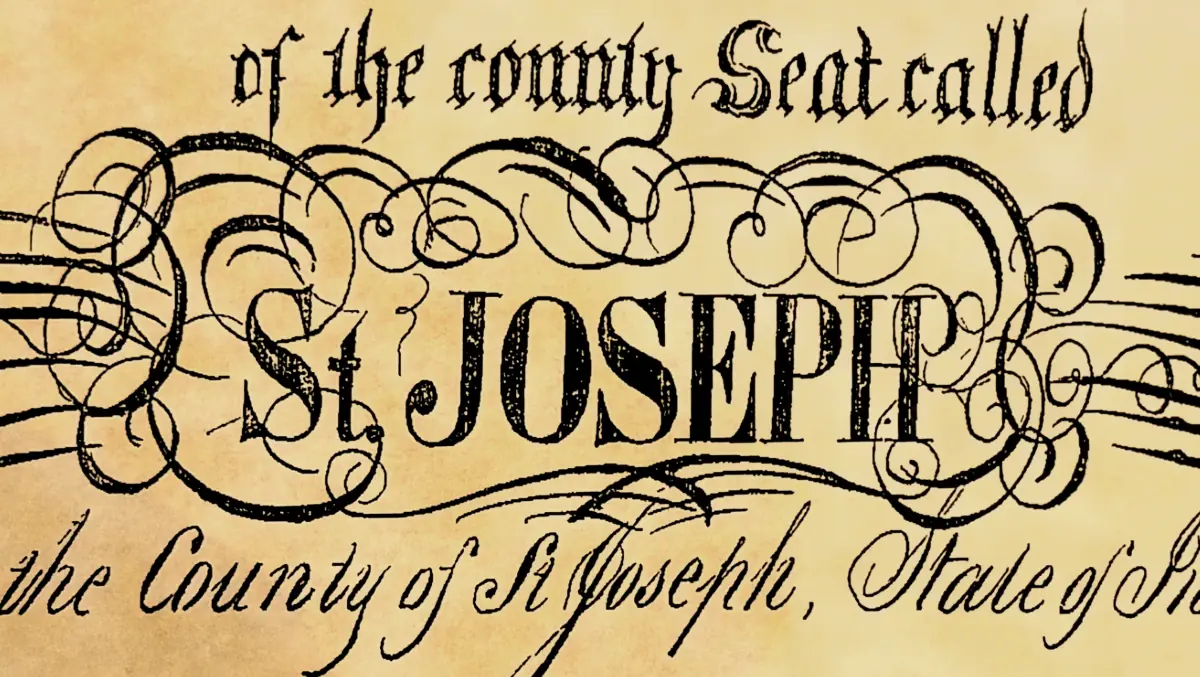
In January of 1830, a roomful of bureaucrats sat down with a map of Indiana, looked at the empty and ungridded parts of the northern half of their state, and started drawing lines on it. Four lines made a rectangle, and a rectangle made a county, and all they needed after that was a name to make it official.
In this case, the county they'd drawn already had a river, and the river already had a name, and these were the kinds of people who made a living drawing straight lines on state maps. Not exactly creative types.
They called it St. Joseph County.
After that, they drew another rectangle next to it and called that one Elkhart because they were on a roll and the pen was already wet.
There was no ceremony, and there was no proclamation to read. Just a few lines on a map, a vote, and a big chunk of Indiana wilderness that now technically had a government, except they were far away from the state capital, so they didn't know it yet.
The act passed January 29. It became official April 1. It was May 24 before anyone official showed up to do anything about it.
The state legislature appointed five locating commissioners and sent them to the newly drawn St. Joseph County with exactly one job — to choose the town best suited to serve as the county's seat.
They picked the Town of St. Joseph, and that was kind of a weird choice, because the Town of St. Joseph didn't actually exist.
It never really did.
William Brookfield knew where the good land was. He was a deputy surveyor for the federal government, and he was the first one to drag chains across north-central Indiana. Brookfield was responsible for cutting the wilderness into the kinds of neat squares that the land offices could sell to settlers and pioneers.
Brookfield was also a bit of a speculator, and maybe that was a little bit of a conflict of interest, because just about as soon as he finished surveying a section just north of downtown South Bend, he went and bought it for himself.
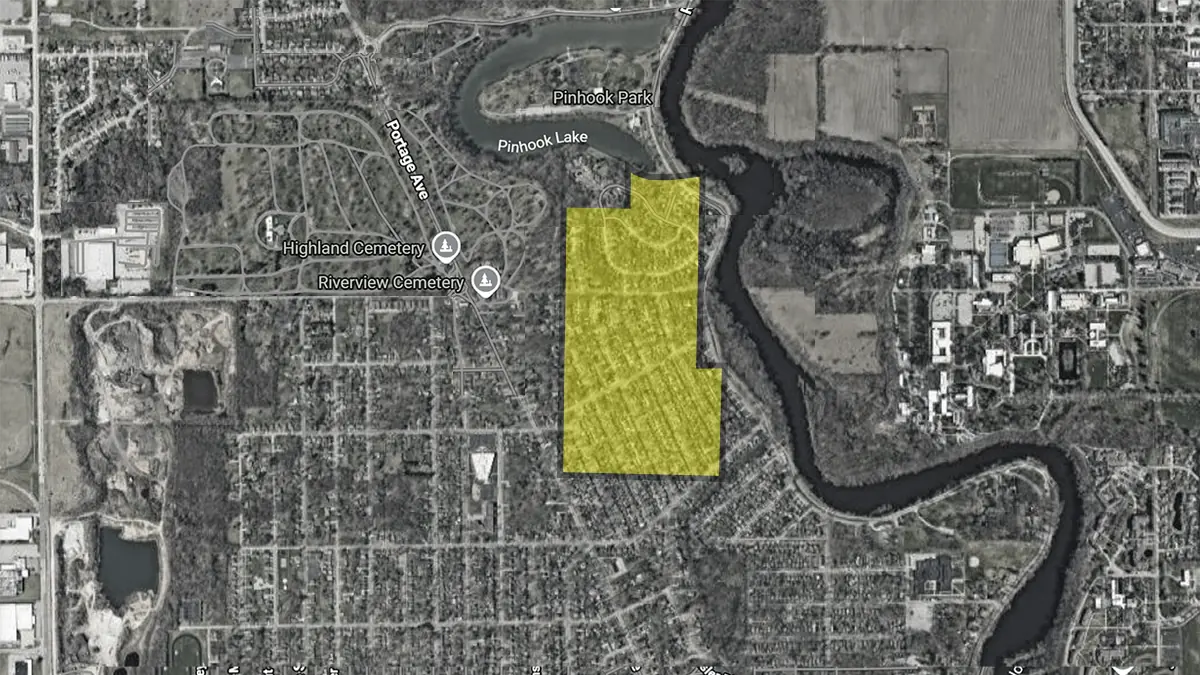
Brookfield's land started at what is now the Riverview Cemetery, and it stretched its way south from there between modern day Portage Avenue and the river. For generations, that had been one end of the very same historic portage that French fur traders had used for generations and that Native Americans had used for generations before them.
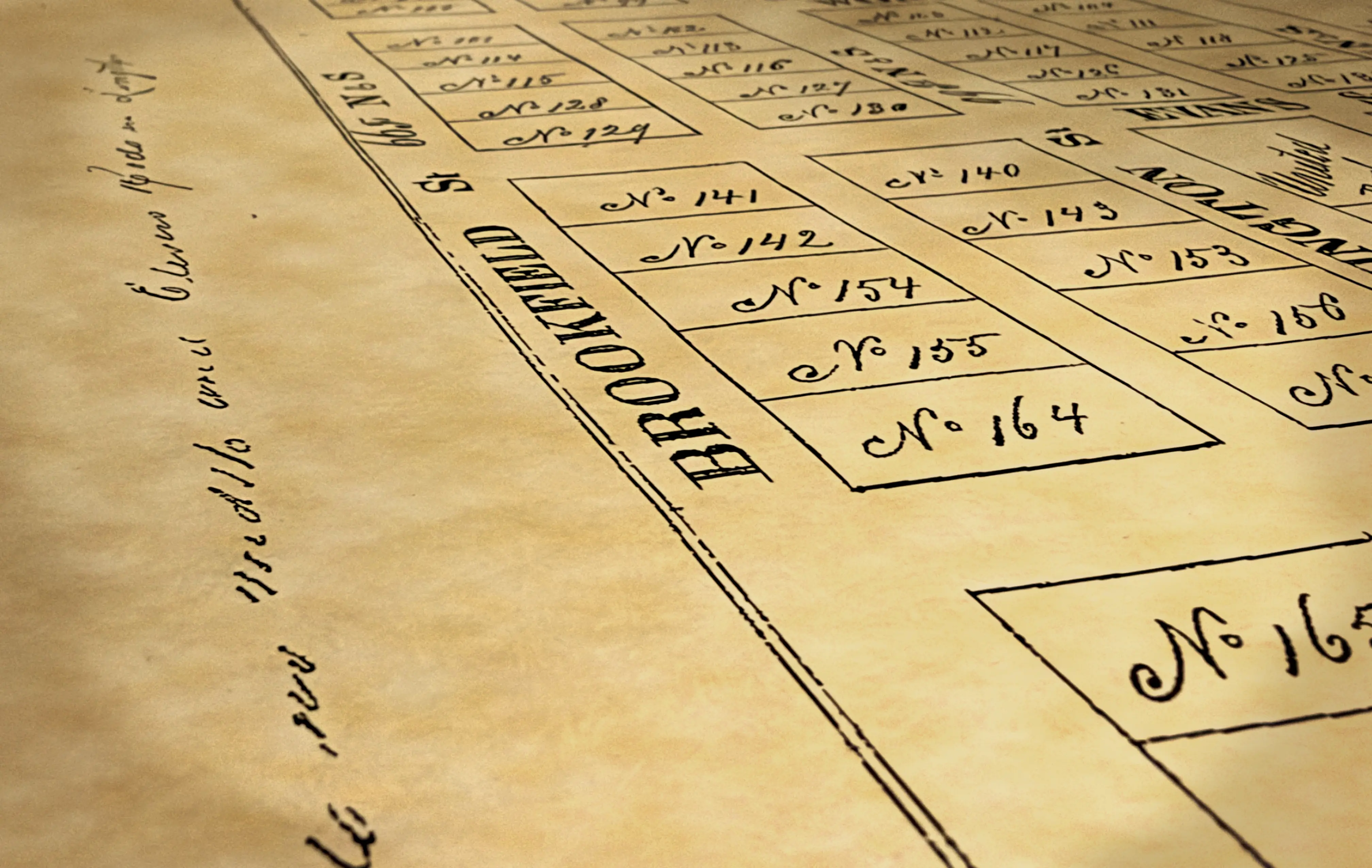
Brookfield drew a map of his land, and then he drew a town on top of it, filled with a neat grid of streets and dozens of lots reserved for public and private purposes. He never built the town, and he never got particularly close to doing so, but he did have that map, and it was — technically speaking — the first town ever platted in St. Joseph County.
When the commissioners showed up to select a county seat, Brookfield had the most impressive paper trail. South Bend had everything else.
But bureaucrats love a paper trail.
A subscription to the News-Times is always free.
Enter your email address and get new issues straight to your inbox.
The Town of St. Joseph had everything anyone could ever want, at least on paper. Brookfield had agreed to donate almost all of his land to the county, including lots for a jail, a courthouse, and a town square. He reserved lots for churches, two apiece for Episcopalians, the Methodists, the Presbyterians, the Baptists, the Roman Catholics, and the United Brethren. Apparently a proper county seat needed lots of places to pray, and Brookfield wasn't about to lose a single potential customer over doctrine.
Down the middle of the map ran Broadway, more than 120 feet wide. On Brookfield's map, the Michigan Road ran right down Broadway before it turned due west to Lake Michigan. He was not dreaming of a lazy river outpost. He was dreaming of a metropolis.
William Brookfield did everything he could to stack the deck in his favor. Besides that impressive map, he also had a name that was almost impossible to resist. How could the Town of St. Joseph not be the seat of St. Joseph County?
In case all of that wasn't enough, he also named five of the hypothetical streets in his hypothetical town after the five commissioners who were tasked with deciding where the county seat would go.
On May 24, 1830, they decided.
They chose the Town of St. Joseph.
The people of St. Joseph County weren't crazy about the decision. Five out-of-town commissioners had just located the center of their government at a place that didn't actually exist, and somehow, they were still supposed to do governmental work.
So the government of St. Joseph County did what anybody would do. It went where the people were. That meant South Bend. For the first year of its existence, the business of the government of St. Joseph County happened almost entirely in Alexis Coquillard's living room.
It wasn't an uncommon arrangement. Early county governments tended to gather in homes and taverns until they could build their courthouses and county jails. By November 1830, they were ready to start thinking about building those kinds of places.
They just needed the money to do it.
That's why, in November 1830, the county fathers gave William Brookfield their blessing to start selling off the land he'd donated to the county in the Town of St. Joseph. The proceeds from those sales would go directly to putting up their first governmental buildings, in exactly the same places that Brookfield had shown on his map.
The only problem was that there's no sign that anyone was buying anything. The Town of St. Joseph wasn't really a town yet. It was an experiment if it was anything. No one wanted to be the first one to live there, and in the end, no one did.
Not a single house was built.
A month after they authorized William Brookfield to start selling land, the people settled on a new strategy. More than 125 of them signed a petition requesting that a new set of commissioners reconsider the county seat. They sent the petition down to Indianapolis.
Then they waited.

The state legislature took up the petition, and it looked favorably upon the prayers of the people. They named five new commissioners and tasked them with reconsidering the question of the county seat. The act also told them exactly where they were supposed to meet:
“The said commissioners shall convene at the house of William Brookfield.”
That's right. The one and only piece of official county business that took place in the seat at the Town of St. Joseph was the decision about whether or not they would ruin the place and the man who dreamed it.
There was one more provision. If the commissioners moved the seat, the county had to return everything Brookfield and anyone else had donated to get it: all the money, the land, and the lots. Nobody wrote down whether Brookfield read that as an insult or an escape hatch.
Meanwhile, a few miles upriver, Coquillard and Lathrop Miner Taylor got to work. On March 28, 1831, eight weeks after the act passed, they recorded the plat of a town of their own. They called it South Bend. It had a grid of streets and quarter-acre lots, and it had the same things Brookfield's map had: ground set aside for a public square, for churches, and for schools.
In other words, it looked a lot like a county seat.
The commissioners were due in May. Coquillard and Taylor had about six weeks to get ready. They might not be able to beat Brookfield's offer, but they had something that Brookfield didn't have:
A real, actual town.
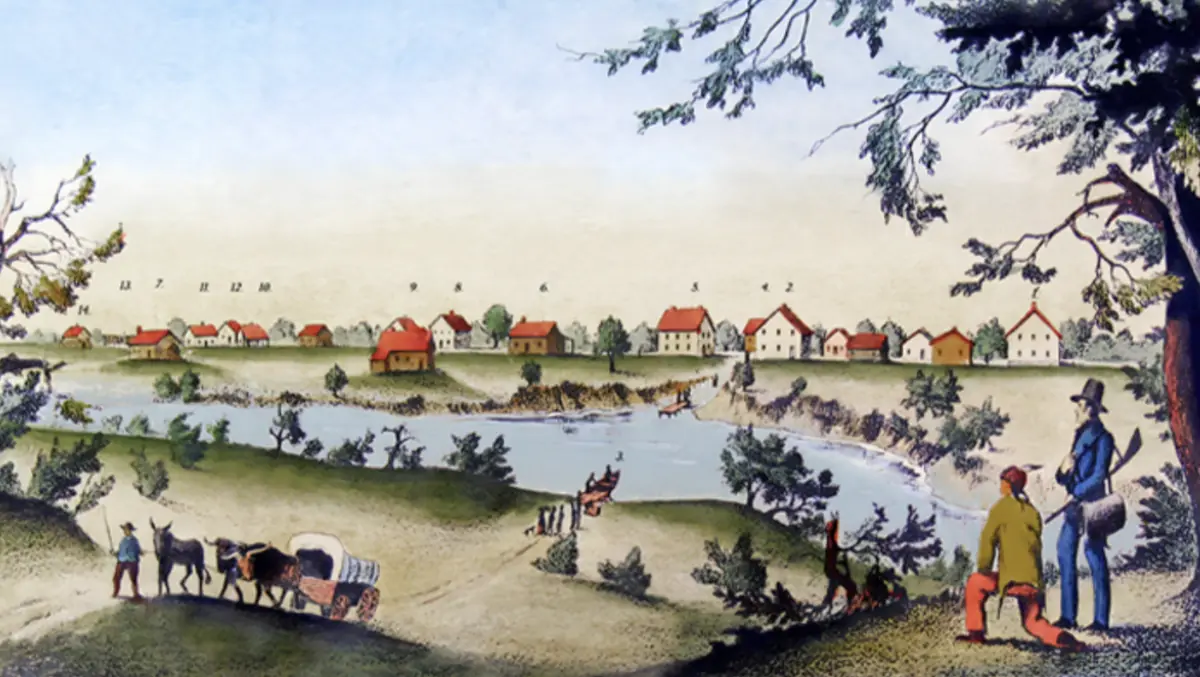
According to the report of the commissioners, they “proceeded immediately to examine the present seat of justice.” That meant the Town of St. Joseph, and that meant that there wasn't much to examine. They made their decision quickly.
The county seat would need to be moved, and South Bend was ready to plead its case.
They pledged fifteen lots in the new town of South Bend to the county, listed by number. They pledged a lot for the United Brethren, a lot for the German Baptists, and a lot for the Presbyterians. They pledged four acres for a public graveyard. That was in addition to the public square and the church and school ground already marked on their plat.
Then came the money. Coquillard, Taylor, and four backers, Joseph Rohrer, Samuel Studebaker, Samuel Hanna, and David Coldrick, signed a joint bond for $3,000, payable to the county in three yearly installments of $1,000 each. The condition was spelled out plainly: the county seat had to be “permanently located at the South Bend.”
Three days after they got to town, the commissioners signed their report. The county seat of St. Joseph County would move to South Bend. For all intents and purposes, that's where it already was.
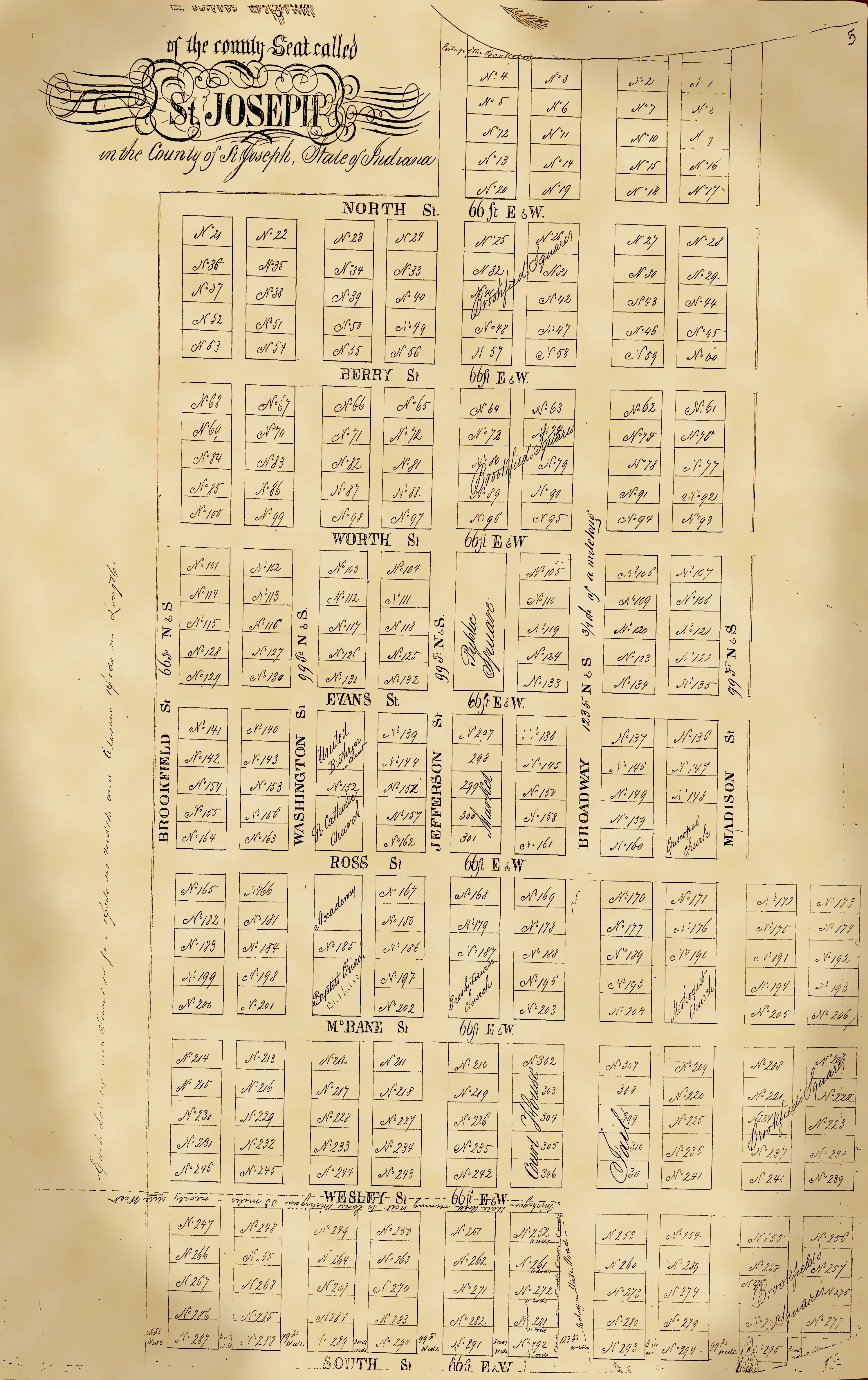
William Brookfield might have felt pretty sore at the way everything went down. On paper, his offer was better than South Bend's. He'd given the county 268 lots. Coquillard and Taylor gave 15. On paper, his town had been better too.
But people don't live on paper, and they didn't live in the Town of St. Joseph either.
When the dust settled, everything was returned to Brookfield, and his town went back to being what it had always been — a riverfront wilderness waiting for someone to turn it into farmland.
William Brookfield didn't stick around to farm it.
Less than two weeks after the state took the county seat away from him, Brookfield got himself a land patent in Texas. He left St. Joseph County before he could watch South Bend build any of the amenities that were supposed to be his. He never came back. His obituary doesn't remember that he was ever here in the first place.
There's a Brookfield Street not far from the man's hypothetical town. It's probably named after someone else.